Nicholas Korianski Producer

Nicholas Korianski

Appears in 8 Episodes

#21

Retention Starts At Recruiting with Robyn Vasko

Robyn Vasko has spent over 25 years in talent acquisition, including leading recruiting for healthcare systems as large as 14 hospitals, 40,000 employees, and 10,000+ hires a year. In this episode, she talks with Colleen about the year and a half she spent as a stage four colon cancer patient inside the very kind of healthcare system she used to staff, and how that experience reshaped the way she thinks about hiring, retention, and the people behind the roles. Robyn shares why she believes retention starts at recruiting, how a former employer hired and kept her through chemotherapy, why she trains recruiters to challenge hiring managers instead of just filling requisitions, and where she draws the line on AI in the interview process. She's currently the Director of Talent Strategy and Consulting at The Talent Advisory.   Takeaways: Retention starts at recruiting, not on day one. The first impression a candidate gets, whether that's a fast callback or three months of silence, tells them exactly how much the organization will care about them once they're hired. Slow, silent hiring processes have a cost. When a candidate applies and hears nothing for months, don't be surprised when they've moved on, or when they tell others not to bother applying either. Good recruiters challenge hiring managers, they don't just fill requests. Pushing back on "just add more interviews" protects the candidate experience, speeds up time to hire, and builds trust as a strategic advisor rather than an order-taker. AI can accelerate the process, but it shouldn't replace the human moments that matter most. Use it to respond faster and keep candidates warm in the pipeline, not to conduct the conversations where real connection gets built. For frontline and clinical roles especially, assess for resilience and humanity, not just clinical skill. Asking what someone needs from their team, or how they've recovered from a hard day, surfaces the traits that actually predict whether they'll stay. Quote of the Show: "We can assess for things like resilience, and discover who they are as a human, not just as a worker." - Robyn Vasko Links: LinkedIn: https://www.linkedin.com/in/robyn-vasko-884b014/ Website: https://www.pumpupyourtalent.com/ Ways to Tune In: The Talent Bar: https://thetalentbarpodcast.com/  Spotify: https://open.spotify.com/show/6j8LK95YtqW7ZMU4kwBNgR   Apple Podcasts: https://podcasts.apple.com/us/podcast/the-talent-bar/id1891705495  Amazon Music: https://music.amazon.com/podcasts/b7f77aa2-de4c-4e5c-b5de-cfe60fe39c77   iHeart Radio:https://www.iheart.com/podcast/1333-the-talent-bar-328811219 YouTube: https://www.youtube.com/@TheTalentBar
#20

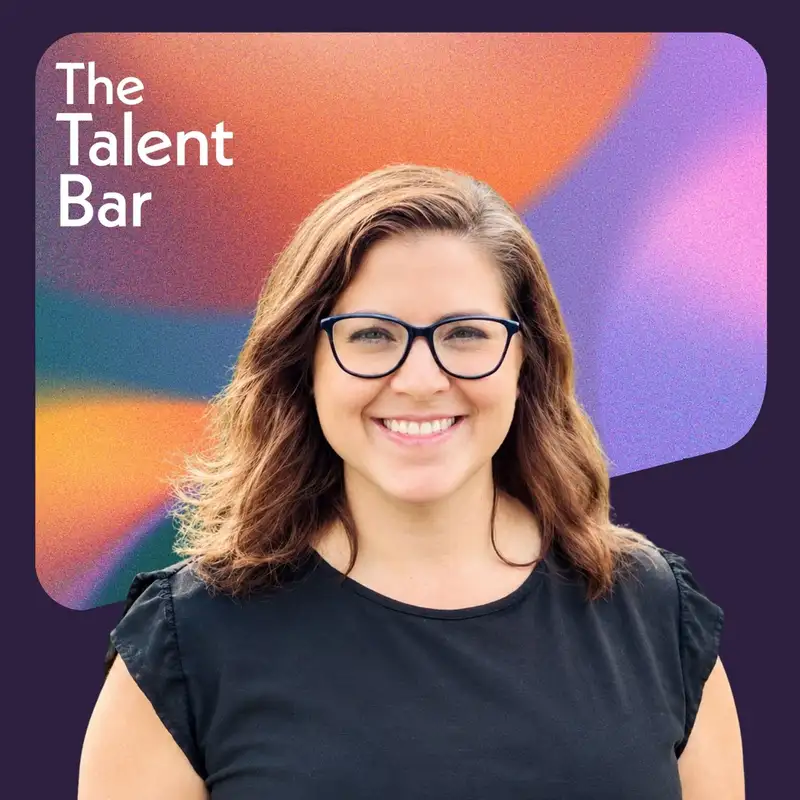
Treat Hiring Like a Product with Sarah-Jayne Lehtinen

Sarah-Jayne Lehtinen never planned on a career in HR. She spent four years as an elementary school teacher, seven years at an aerospace company, and the last decade building the entire people function at ed-tech company Prodigy Education, where she now serves as Chief People Officer. In this episode, she talks with Colleen about borrowing a page from the sales playbook, literally handing her recruiting team a copy of the HubSpot Sales Acceleration Formula and mapping the hiring funnel stage by stage, why she believes the best recruiters treat hiring like a product, and how her team screens for culture fit without sliding into similar-to-me bias. Sarah-Jayne also shares how team heat maps and quarterly squad health checks help her figure out which teams are actually delivering, and the mindset shift, from survey fatigue to lack of action fatigue, that transformed employee participation at Prodigy.   Takeaways: Treat recruiting like a product. The best recruiters and recruiting teams stay in constant experimentation mode instead of getting attached to how things have always been done. Testing, learning, and iterating raises the bar over time, both for individuals and for the whole function. Borrow the sales playbook for your funnel. Sarah-Jayne modeled Prodigy's recruiting pipeline on HubSpot's Sales Acceleration Formula, tracking every stage to see where candidates drop off. The right number of interview stages isn't fixed, it moves with the labor market, so revisit it as hiring conditions change. Culture fit isn't about hiring people who remind you of yourself. It's about finding people who will thrive in your environment and make the people around them better, and it should be assessed through conversation, not resume screening. Train dedicated people to spot it consistently, the way Amazon's bar raiser model does. Survey fatigue is really lack of action fatigue. People keep answering surveys and giving feedback when they see leadership actually act on it. Follow up, communicate clearly, and hold managers accountable, and participation follows. Give AI-assisted work a pass, as long as candidates can speak to it. Let people use AI on take-home projects or case studies, then use the interview to focus on whether they truly understand and can explain what they produced. Quote of the Show: "The best recruiters and the best recruiting teams treat hiring like a product." - Sarah-Jayne Lehtinen Links: LinkedIn: https://www.linkedin.com/in/sarah-jayne-lehtinen-051702a1/ Website: https://www.prodigygame.com/main-en?direct=true&_gl=1*bxou4a*_up*MQ..*_gs*MQ..&gclid=CjwKCAjws_DTBhB_EiwAXZknGdzQuurNk-rr0kQCFy0N5yACR6hPa3ha5FA6Gy9xCFq89rNsbqh5IhoCd70QAvD_BwE&gbraid=0AAAAADECvhvBWbwaxUsthQXf-iFNPfWGw Ways to Tune In: The Talent Bar: https://thetalentbarpodcast.com/  Spotify: https://open.spotify.com/show/6j8LK95YtqW7ZMU4kwBNgR   Apple Podcasts: https://podcasts.apple.com/us/podcast/the-talent-bar/id1891705495  Amazon Music: https://music.amazon.com/podcasts/b7f77aa2-de4c-4e5c-b5de-cfe60fe39c77   iHeart Radio:https://www.iheart.com/podcast/1333-the-talent-bar-328811219 YouTube: https://www.youtube.com/@TheTalentBar

#19

High Volume Hiring & Real Trust with Sofie Roberge

Sofie Roberge has hired at a scale most recruiters never see, from staffing 1,200 roles in 18 months to get a Lucid Motors EV factory production-ready, to leading talent acquisition roles at Apple and Canva. In this episode, she talks with Colleen about how her team at A1 Garage Door Service processes roughly 100,000 applications a year with just four recruiters, why she thinks the "AI is rejecting candidates" narrative on LinkedIn is mostly a myth, and how her deep operations background shapes the way she partners with the business. Sofie also gets into what it actually takes to build a measurable definition of quality of hire, and why she believes the skilled trades are having a real moment right now.   Takeaways: Responsiveness is non-negotiable. At A1, every one of the roughly 100,000 applicants they get each year is processed within two days, and that speed is a direct reflection of how much the company cares about its candidates and its brand. Let AI handle the volume, not the judgment. Sofie's team uses AI criteria to shortlist thousands of applicants in minutes, but a human still reviews every single resume before anyone is rejected. A polished, AI-assisted resume isn't automatically a red flag. Candidates are using AI to write more consistent, professional resumes, and the job now is to look past the polish and verify fit through real conversation. Get embedded in the business you support. Sofie knows her company's operating metrics, shows up to technician meetings, and speaks the same language as her hiring managers, which is what earns recruiting real credibility. Quality of hire is measurable if you build for it. Early turnover, hiring manager satisfaction surveys, and performance benchmarks turn a fuzzy concept into something a team can actually track and act on. Quote of the Show: "AI is not the problem. If you've got the qualifications, AI will surface you." - Sofie Roberge Links: LinkedIn: https://www.linkedin.com/in/sofie-roberge/ Website: https://a1garage.com/ Ways to Tune In: The Talent Bar: https://thetalentbarpodcast.com/  Spotify: https://open.spotify.com/show/6j8LK95YtqW7ZMU4kwBNgR   Apple Podcasts: https://podcasts.apple.com/us/podcast/the-talent-bar/id1891705495  Amazon Music: https://music.amazon.com/podcasts/b7f77aa2-de4c-4e5c-b5de-cfe60fe39c77   iHeart Radio:https://www.iheart.com/podcast/1333-the-talent-bar-328811219 YouTube: https://www.youtube.com/@TheTalentBar
#18

Talent Is a Business Lever with Yolanda Hawkes

Yolanda Hawkes has spent more than 20 years building recruiting operations inside some of the most complex, high-volume environments in the country, from manufacturing and aviation to AWS, along with a side chapter advising professional athletes on career transitions. In this episode, she talks with Colleen about why curiosity and lifelong learning separate the best recruiters from the rest, how she approaches turnover as a root-cause problem rather than a "just hire better" problem, and why AI should give recruiters information, not make the decision for them. Yolanda also the advice she'd give her newly graduated self about networking long before you need anything from anyone.   Takeaways: Curiosity is a hiring superpower. The recruiters Yolanda trusts most are genuinely curious about their candidates, their hiring leaders, and the business itself, and they treat staying current as part of the job, not an extra. Fix turnover with root cause analysis, not finger-pointing. When turnover runs high, Yolanda pushes TA and HR to dig into whether the issue lives in the screening process or with a struggling supervisor instead of blaming each other. Candidates are customers too. Yolanda's early years hiring taught her that even in high-volume, hard-to-fill roles, the people applying are customers of the business, and that shapes every interaction she has with them. Let AI inform the decision, don't let it make the decision. Yolanda has used AI screening tools to bring efficiency to high-volume hiring, but she draws a hard line at letting a tool make the final call on a person. Talent is a business lever, not an HR function. Whether it's staffing a plane crew or building a diversity pipeline from scratch, having the right people in place at the right time drives real business outcomes, and treating recruiting that way is how you earn a seat at the table.  Quote of the Show: "Talent is not an HR function, it's a business lever." - Yolanda Hawkes Links: LinkedIn: https://www.linkedin.com/in/yolandahawkes/ Website: https://www.linkedin.com/company/gat-airline-ground-support/ Ways to Tune In: Recruiters On The Rise Website: https://recruitersontherise.com/ Spotify: https://open.spotify.com/show/6j8LK95YtqW7ZMU4kwBNgR  Apple Podcasts: https://podcasts.apple.com/podcast/recruiters-on-the-rise/id1891705495   Amazon Music: https://music.amazon.com/podcasts/b7f77aa2-de4c-4e5c-b5de-cfe60fe39c77  iHeart Radio: https://iheart.com/podcast/328811219/  YouTube: https://www.youtube.com/@recruitersontherise 
#17

Going Slow to Go Fast with Jennifer Paxton

Jen Paxton just got promoted to SVP of People and Talent at Roofr, and she's earned it: an opera degree, three startup acquisitions, and a co-founded company (also acquired) later, she's built a people function that runs on urgency without sacrificing quality. In this episode, she talks with Colleen about why speed and momentum are everything once a candidate is in process, how "going slow to go fast" with hiring managers at the intake stage actually shortens time to hire, and why quality of hire is never one single metric. Jen also opens up about what it took to earn a seat at the leadership table as a people leader, and how her opera background sneaks its way into her day job more than she'd like to admit.   Takeaways: Momentum is everything once a candidate is in process. The high they feel after a great interview fades fast, and any lull in communication opens the door to doubt, so recruiters need to keep things moving instead of letting a hiring manager sit on a decision. If a hiring manager is on the fence about a candidate, that's usually a no. Jen coaches managers to move on rather than let decision paralysis drag out a process and risk keeping a good candidate warm for too long. Slowing down at the very start of a search saves time later. A real intake conversation, or even having a hiring manager source three LinkedIn profiles themselves, forces them to name what they're actually looking for instead of defaulting to "I'll know it when I see it." Quality of hire isn't one number. Jen looks at ramp-up time, first-year turnover, nine-box placement after the first review cycle, and a simple gut check she asks every manager at 60 days: would you rehire this person? Knowing the business, not just headcount, is what earns people leaders real influence. Jen credits understanding company strategy and speaking the language of the leadership team with the trust that helped land her promotion to SVP. Quote of the Show: "Not every culture is for a person, not every company is." - Jen Paxton Links: LinkedIn: https://www.linkedin.com/in/jenpaxton/ Website: https://roofr.com/ Ways to Tune In: Recruiters On The Rise: https://recruitersontherise.com/ Spotify: https://open.spotify.com/show/6j8LK95YtqW7ZMU4kwBNgR  Apple Podcasts: https://podcasts.apple.com/podcast/recruiters-on-the-rise/id1891705495   Amazon Music: https://music.amazon.com/podcasts/b7f77aa2-de4c-4e5c-b5de-cfe60fe39c77  iHeart Radio: https://iheart.com/podcast/328811219/  YouTube: https://www.youtube.com/@recruitersontherise 
#16

The Professional Cupid with Guillermina Cabello

Guillermina Cabello has spent more than 30 years recruiting IT talent across Mexico, Latin America, and the US, building her own agency from scratch and developing a proprietary screening method along the way. In this episode, she talks with Colleen about what nearshore recruiting really requires, from correcting cultural assumptions about salary bands to navigating TN1 visas and the accent bias that gets mistaken for a language problem. Guillermina also shares why she conducts nearly every interview by phone instead of video to strip out bias, how she coaches candidates even when they're not a fit for the role, and what it's like calling out ageism in an industry that treats her three decades of experience as both an asset and, in some rooms, a liability. Takeaways: Put the candidate's life ahead of your fee. Guillermina says thinking about the long-term impact of a placement on a candidate, not just closing the role, is what builds the kind of trust that keeps opportunities coming back around. Give candidates something useful even when they don't get the job. Guillermina flags resume tweaks or has candidates read English aloud to build fluency before an interview, because recruiters who help regardless of outcome are the ones candidates remember. Nearshore recruiting takes cultural translation, not just a second language. Understanding realities like candidates who worked through school, or an accent that has nothing to do with fluency, keeps good people from getting screened out for the wrong reasons. Roll AI out in small, measurable steps instead of cutting headcount upfront. Guillermina has watched companies rush to replace workers with AI only to end up rehiring, so she recommends testing tools in select areas and reviewing the return on investment before expanding. Market experience as an asset instead of hiding it. Guillermina compares her decades in the industry to wine, something that only gets more valuable with age, even in a market that still treats tenured candidates as a risk instead of a resource. Quote of the Show: "We recruiters are like professional Cupids. You have two individuals, and you have to see if they actually match." - Guillermina Cabello Links: LinkedIn: https://www.linkedin.com/in/guillec/ Website: https://www.ascend-mc.com/ Ways to Tune In: Recruiters On The Rise Website: https://recruitersontherise.com/ Spotify: https://open.spotify.com/show/6j8LK95YtqW7ZMU4kwBNgR Apple Podcasts: https://podcasts.apple.com/podcast/recruiters-on-the-rise/id1891705495 Amazon Music: https://music.amazon.com/podcasts/b7f77aa2-de4c-4e5c-b5de-cfe60fe39c77 iHeart Radio: https://iheart.com/podcast/328811219/ YouTube: https://www.youtube.com/@recruitersontherise
#15

Building the Shipbuilding Workforce with Pedro Velis

Pedro Velis spent six years as a staff accountant at Wawa before pivoting into recruiting, and today he is the Director of Talent Acquisition and Workforce Development at Hanwha Philly Shipyard, a shipyard recently featured on 60 Minutes for its role in growing America's shipbuilding capacity. In this episode, he talks with Colleen about the massive skilled trade shortage facing the shipbuilding industry, why he builds his team out of people with nontraditional backgrounds, how he cut turnover at a food manufacturing plant by slowing down the hiring process, and the career advice he wishes he had given himself decades ago. Takeaways: Understand the business before you recruit for it. Pedro believes every talent acquisition professional has to learn how their company actually makes money and how each department contributes to that, not just the requirements of the job description. Diverse backgrounds build stronger teams. Pedro has hired a former elementary school teacher and a shipyard carpenter of 25 years onto his recruiting team, valuing the outside expertise they bring over a traditional recruiting resume. The country faces a massive skilled trade shortage. Pedro cited an estimate from the Department of Defense of roughly 175,000 skilled workers needed over the next ten years, and welding booths sitting empty is a lost opportunity. Growth is coming fast. Hanwha Philly Shipyard currently builds about one and a half ships a year with roughly 2,000 employees, and the goal is to reach ten to twenty ships a year, which could grow the workforce to somewhere between five thousand and ten thousand people. Slowing down hiring can fix turnover. At a previous food manufacturing job, Pedro pushed back on a plant director who wanted twenty new hires a week, arguing that better onboarding and training would keep more of the people they already hired. Do not be a one trick pony. Pedro describes himself as having a Batman utility belt of skills instead of one specialty, and he encourages his team to build a little bit of knowledge across finance, comp, and employee relations rather than mastering only one lane. Quote of the Show: "Don't be afraid to fail, and have confidence in yourself."  - Pedro Velis Links: LinkedIn: https://www.linkedin.com/in/pedro-velis-mba/ Website: https://www.hanwha.com/companies/hanwha-philly-shipyard.do Ways to Tune In: Recruiters On The Rise Website: https://recruitersontherise.com/  Spotify: https://open.spotify.com/show/6j8LK95YtqW7ZMU4kwBNgR  Apple Podcasts: https://podcasts.apple.com/podcast/recruiters-on-the-rise/id1891705495   Amazon Music: https://music.amazon.com/podcasts/b7f77aa2-de4c-4e5c-b5de-cfe60fe39c77  iHeart Radio: https://iheart.com/podcast/328811219/  YouTube: https://www.youtube.com/@recruitersontherise