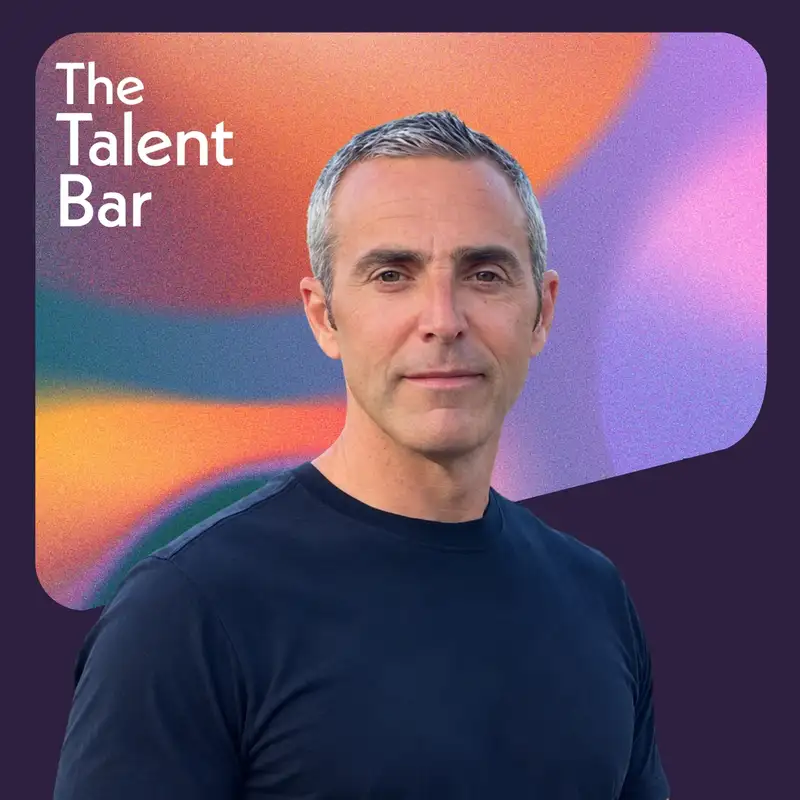
TTB - Daniel Dale
===
[00:00:00]
colleen-gallagher_6_10-01-2026_113546: Hello everyone, and welcome to today's episode of The Talent Bar. I'm so excited to have our guest with us today. Um, we're, we're gonna talk about things like his unusual route into talent acquisition. He actually started his career in sales, carrying a quota, selling security products to major enterprises, and working, uh, channels across EMEA. He then switched sides, built his own recruiting agency, and eventually went in-house. Um, he's been at the same cybersecurity company for almost 10 years, growing from a senior recruiter to a director leading TA across EMEA and APJ, [00:01:00] I'm really excited to learn a little bit more of his perspective on all topics that are relevant right now in the TA world. Um, he's currently the director of, of TA for EMEA and APJ at Tenable. Daniel Dale, welcome to the
show
dan_1_10-01-2026_193546: Thanks for having me, Colleen
colleen-gallagher_6_10-01-2026_113546: so I love to start with, uh, my standard question is, what is the one thing or one action that makes the best recruiter?
dan_1_10-01-2026_193546: Um, I, I think for me, uh, what I look for and I, I think what's kind of got me to where I am is, is really understanding the business and not just about trying to fill seats or fill reqs. It is about kind of understanding the business that you're working for and the business that you're servicing. So that's probably the number one thing for me
colleen-gallagher_6_10-01-2026_113546: how do you make sure that you're bringing that mindset into your teams and, and, and look for that in the people that you hire?
dan_1_10-01-2026_193546: Yeah. I, I think it's, I've, I've been lucky with the team that, or the people that I've kinda got in my team, that they all [00:02:00] want to feel that they're part of the end result. So, you know, it's not just about the hires they make, you know, you know, I kinda put it in from a sales perspective. You know, they wanna see that person hit their quota, you know, stand up on stage at SKO, you know, those kind of things, and take pride in seeing, you know, those people be successful and, you know, effectively do all the things that they said they were gonna do during the interview process, and all the things that we thought they were gonna be able to do.
So, you know, I, I kinda look for that in the way that people talk about, you know, you know, how they do some of the basics really well. You know, how they engage with stakeholders, how they kind of, you know, kind of, you know, put forward candidates, how they talk about candidates, you know, things like that. So that kinda comes through that.
But yeah, it's, it, it's something that can be taught, but it, it gets hard if, if you don't wanna do it
colleen-gallagher_6_10-01-2026_113546: You're right, yeah. There has to be the willingness [00:03:00] there. Um, well, I mentioned this in the intro. You, you spent the first part of your career in IT sales and, you know, selling to some of the largest, uh, companies in the world, and I'm curious, like how has that shaped the way you think about recruiting?
dan_1_10-01-2026_193546: Yeah. I, I suppose for me it's, it's I've got enough information or kind of enough experience to be dangerous, right? So I, I did start off, you know, you know, in sales as an SDR, you know, something that's kind of relevant kind of for everyone, but taking the Yellow Pages or whatever it is and calling and, and making lots of calls to people about products and, and, and basically kind of earning, you know, and kind of doing the hard yards there and, and then progressing more and more to kind of customer-facing sales.
Um, and then, you know, working for, you know, f- really good companies and then trying to chase the startup dream a little bit, which, you know, kind of never really materialized. Um, and then found [00:04:00] myself doing it in a slightly different way with, um, a very good friend of mine and, and someone that kind of mentored me through the recruitment side and as I helped him to understand the sales side.
And, you know, we successfully, you know, launched some, you know, s- uh, Silicon Valley startups in EMEA. Um, and that's kind of where my kind of recruitment journey kind of began. And then what I realized is that the product side of things I didn't really like that much, but kind of s- you know, selling recs and working with people I really enjoyed.
Um, and, and that's kind of 10, you know, 10, 15 years later, I'm, I'm still in the recruitment side
colleen-gallagher_6_10-01-2026_113546: I see a lot of TA leaders who have spent time, um,
in an agency to the point where I'm like, it, is this, would you recommend to, to folks to spend time in an agency verse [00:05:00] before going in-house?
Or how did, how did you think about, you know, or, or, or what do you think it has done to help develop you, especially tying it back to like understanding the
business?
dan_1_10-01-2026_193546: Yeah, I, I, it's a different, I, I think it's a different perspective. So I think some of the, the skills that you learn when you're in an agency, uh, you know, it's, you know, you have to graft. Like you're going-- it's very competitive. You're competing against other agencies, some good, some not so good. So it's always about trying to, you know, show why you're better, you know, and kind of, you know, have the better network, have the better contacts, you know, present the better candidates, you know, those kind of things, you know, operate better.
So I think one of the things that I realized as I continued sort of that on the agency side was that what I didn't necessarily have is I didn't have kind of full insight into how the customer worked. So, you know, you'd kind of get to [00:06:00] a point and as much as, again, you often hear that kind of RPO model or that, you know, we're, we're an extension of your team, that only goes to a certain point.
And, uh, some of the decisions, some of the directions, some of the way things are done are completely beyond your, your sight. So when I, when I kind of made the switch and did some contracting and sort of did my in-house piece, um, I got to see some of that. And what I liked about that was taking all that knowledge that I'd kind of got and experience I'd got from selling, all of the kind of, I suppose, the, the, the rough edges of being at an agency or kind of having an agency and then, you know, kind of looking at how we finesse that.
Because, again, you kind of have to talk a slightly different language to internal stakeholders and, and other people kind of within the business to try and make it work on that side. So for me it was very much about kind of rounding, becoming a much more rounded [00:07:00] kind of business partner, recruiter, whatever you wanna call it.
But, so, you know, uh, that's the thing that I think is, a-a-again, we kind of talk about that business acumen. If you can take all of the, the, the rough and readiness of a, of an agency recruiter that's willing to go and scrap for, you know, and source and, you know, and keep on going, and then try and kind of, you know, match that up with the finesse and, you know, the ability to kind of speak the language of the business, then, you know, I think you've got, you know, a match made in heaven
colleen-gallagher_6_10-01-2026_113546: of the things, uh, you, you had shared with me is that you tell your team that things fall into two camps, like business problems and recruitment problems. do you tell the difference?
dan_1_10-01-2026_193546: typically for me, it, it's if there, if, if, if us as a recruitment team do everything that we're there to do, so, you know, from, you know, from the very outset of the kickoff, the briefing, whatever you wanna call it, you know, up to the sourcing and kind of managing the [00:08:00] candidates through and kind of presenting a good pool of candidates to the hiring managers or, or, you know, or, or to whoever is, is looking at it, for me, that's kind of, that's the end of everything from a recruitment standpoint.
You know, you're kind of managing the candidates, you're managing the stakeholders, you know, and kind of everything that's kind of auxiliary to the, to the recruitment side of it. When it comes to things like making hiring decisions and, you know, are we gonna hire now? Are we gonna hire later? Are we gonna backfill that role?
Aren't we gonna backfill that role? Yeah, all of those kind of things, for me, they're business problems. So we can do all our work, and again, this is one of the things I saw and I've kind of, have come across with agencies is, you know, things change in a business and you've gotta, you know, you've gotta understand that.
You know, sometimes you're gonna make a hire, then for some, some unknown reason, you decide you, you're not gonna make that hire. It could be strategic, it just could be that role falls out or, or whatever, and you've gotta be able to kind of flex. Now, for [00:09:00] me, that's, like I say, some of those are, are business problems.
They're not recruitment problems. So as far as I'm concerned, it's that you can, like, it's how you manage the pressure. And for me, if we've done all our, if we've done everything we're supposed to do, then I'm comfortable at supporting my team and everything like that
colleen-gallagher_6_10-01-2026_113546: I think what you're talking about leads well into, know, there's a big conversation right now about whether recruiting should own quality of hire. And, you know, I, I was at, um, RecFest in the US last week and there were a lot of stage presentations talking about this. So I'm curious, like, where do you come down on that?
dan_1_10-01-2026_193546: I think, I think hiring generally is a team sport and, and, and the same I feel about quality. I think everyone owns it. Um, a-again, you know, we can design, you know, good processes, good practices, you know, you know, a good, you know, interview and, and, and make sure we're doing all the right things to qualify the best people and therefore [00:10:00] hopefully make good decisions with good data.
But ultimately, you know, it comes down to, you know, that person when they're in the seat, that's when we really find out whether, you know, they're gonna, they're gonna make it or not. So I think everyone, and again, having good partner relationships, you know, recruiter with hiring manager, recruiter with HR, you know, everyone involved in that, um, you know, ultimately kind of decides, you know, if, if this is gonna be a quality hire and, and, and that's the good and the bad as well.
So if it's successful, we can all kind of sit back and say, "Hey, that was a great process. That was... You know, these are all the things that we look for. This is what really worked well." Uh, and, and the same when it doesn't work out, you know, kind of take the time to kinda look back at what happened, where do we think we-- where it kind of broke down.
Not pointing fingers at, you know, "Oh, it's your fault," or, "That wasn't it." It's like, okay, that bit didn't quite work. And it could be anything. It could be an [00:11:00] interview, we missed something, we didn't qualify something enough. Could be the onboarding. It could, it could be anything. It could be the patch. Um, a-and I think that's the part where it's making sure, you know, from the very outset that are we setting, you know, are we setting this role up for success?
Are we setting up the individual we select for success? Um, and then being very honest with ourselves if, if we are and we aren't. I mean, I-I think, you know, when we, we kinda talked before, you know, some of what we're doing when we, you know, you know, when we look at things like backfills or, you know, someone leaves the business and we, you know, rather than just putting someone straight back in, you know, it's very much have that conversation about, you know, what's changed, what's different, what do we need to...
Like, what don't we wanna repeat? Not just for negative reasons, but if that person, you know, we don't go out to get people that aren't gonna be successful. So again, kind of more focusing on the, on the sales side, when we take people that have been successful in previous roles, president's club, [00:12:00] overachieved, and things like that, when they come into, you know, to, to Tenable and perhaps they're not successful, we have to look at the environment in which they're coming in and, and sometimes that's a hard decision, you know, that's a hard conversation.
And then we look at kinda changing it so, you know, we don't waste time next time. So yeah. So, you know, quality hire I think is, you know, is every, you know, should be everyone's kind of responsibility.
colleen-gallagher_6_10-01-2026_113546: I totally agree. think, um, I think the challenging thing though too is like, and, and you and I have talked about this before, is that w- a- and everything you just outlined about like what makes a good hire and how you have to evaluate that and, and, um, really seeing how somebody performs within the organization is obviously the most important thing. a lot of what, um, TA is measured on is metrics around, um, speed to hire [00:13:00] and some of the more like things around efficiency. Um, why do you think that we, we keep focusing on that? Is it just because, um, that's what feels like recruiting can own more, more individually versus the team aspect of it?
dan_1_10-01-2026_193546: Yeah, I th- I think it's 'cause it's the, it's the most obvious, right? It's the, it's the obvious and quickest thing to measure. Everything else takes time. You know, whether it's, you know, kind of sellers or whether it's, you know, engineers, like the impact they have on the business takes time. So, you know, all of that is, is more long tail.
That kind of, you know, did we fill the seat quick enough, time to hire, time to fill, and things like that. I mean, they're arbitrary numbers which don't take into con- you know, really take into consideration any of the, the nuances that go on. And it-- and again, it's, I think, yeah, I mean, it's, it matters, you know, it matters [00:14:00] from a perspective of, look, if a role's not, you know, if a role's taking too long, then we need to kind of investigate.
But again, let's not wait until we've got the data to kind of figure out whether we need to do anything about it. And again, this is that kind of business problem versus a recruitment problem. I mean, we can see very quickly, you know, when you're engaged with the recruiters and the hiring managers, like, you know, do we think we've done enough sourcing?
Like, do we think we've got enough candidates, enough quality? Like, how long is this taking? Um, and again, we, like I, I, you know, my team are dealing with, you know, vast amounts of countries that all operate in different ways. Some, you know, with, you know, religious holidays and, you know, all of those different kind of things and public holidays and, and sometimes those things get in the way.
And again, suddenly that becomes a problem for time to hire. Your, your time to hire metrics go because those individuals have been off for a month. So Yeah I think [00:15:00] they're, for me, they're not indicators of, of whether you're doing really well or really not. Are we, you know, that time to hire, you know, we kind of, we got that fast.
I mean, again, that's all about kind of having the right process in place if you're proactively sourcing, if you're kind of keeping good benches. You know, all of those things where actually suddenly time to hire becomes, you know, days because you've kept people, you know, engaged, warm or whatever, that you can then kind of move them through.
So yeah, it's, it's not something that I'm a big fan of, but again, sometimes you, you kinda just have to go with the, you know, the data points that, that people kind of put to you
colleen-gallagher_6_10-01-2026_113546: Yeah. I mean, I think the sort of the, the other thing we're seeing with, um, with just, uh, some of it is tied into the fact that when we look at AI adoption, a lot of it feels like efficiency for efficiency's sake. Um, and I think you shared, shared that [00:16:00] sentiment when we talked previously.
Like, how are you thinking about using AI and, like, where do you think the focus should
be?
dan_1_10-01-2026_193546: Yeah. I, I mean, look, and again, I think, you know, w-we, we operate in sort of three, you know, three sort of jurisdictions. One which is US, uh, one which is m-my area, and one which is kind of Israel. I think we all have different, we all have different perspectives of, of where AI can broadly help us because of our, you know, we have different challenges.
For me, you know, for me the kind of the efficiency side of it when you kind of look at, you know, sourcing and all of those kind of elements, I mean You know, it, it's how-- Right now I'm not convinced. I'm not convinced right now because of, of, of the way some of it is being adopted and some of the way that it does what it does.
A-and from my perspective, actually, by the, you know, the-- there's quite a lot of heavy lift, you know, to make sure [00:17:00] that, you know, the sourcing, your engage with the, the agent or the prompt, you know, there's quite a lot to go into that, um, to, to try and make it accurate. The, the biggest thing for me right now is, you know, kind of the, the automation and the AI around interviews, you know.
And again, there's a number, you know, th-there's a number of technologies that take the interview, transcribe the interview, you can watch the, the interview back and kind of get all kinds of different data on it, which is really interesting. But for me, that opens the black box of interviews. Like, for me now, we can see inside areas of the, the hiring process we've never been able to, to see before and assess properly, rather than assuming every recruiter, every hiring manager, every interviewer knows what they're doing,
colleen-gallagher_6_10-01-2026_113546: Mm-hmm.
dan_1_10-01-2026_193546: how to interview, is asking the right questions, you know, is engaged and, you know, therefore kind of ex- you know, kind of extracting the best data we can to make good hiring decisions.
Now again, [00:18:00] that's a lot of heavy lift. That's more, in fact, that's probably more work because there's that ability to kind of go back, review. And again, I bore my team to death with this 'cause I've been talking about it for months. But like, to use the sporting analogy, it's our thousand hours of tape. We can go back, we can review, we can re-watch, we can see what's good, we can see what's bad.
We can go and kind of iterate and, and again, going back to your quality of hire, if we do it really well and we improve it, then hopefully better, you know, better quality interviews, better quality data, better quality decisions, and then ultimately kind of, you know, more success that we're, you know, that we're gonna kind of, you know, find
colleen-gallagher_6_10-01-2026_113546: Yeah
dan_1_10-01-2026_193546: forward.
Um, so, you know, AI is here to stay. As, as they keep saying, it's, you know, this is the worst it's ever gonna be. But for me right now, I think, a-and again, I was at a Gartner conference probably three, three years [00:19:00] ago, and, you know, everything was, you know, pointed at recruitment 'cause it was, this is, this is the place where it's high volume.
You know, we, you know, we can do loads of stuff with AI. You know, we're, we're not gonna touch HR. It's too complex. So there was just, like, lots and lots. So I think right now, especially for recruitment, I think it's more of a case of there's a lot of noise. We've got to figure out kind of what the, where the value is.
Um, because, you know, like I say, I think there are definitely gains to be had, uh, to be had, but it's what's the real value?
colleen-gallagher_6_10-01-2026_113546: Yeah.
colleen-gallagher_6_10-01-2026_113546: [00:20:00] I love the, you know, hiring is a team sport, I couldn't agree more in sort of reviewing tape. Um, and I think some, some listeners might have challenges getting people outside of recruiting to adopt and, and think of it as a, um, a way to help them drive better value on their team and for the organization versus sort of like this big brother, somebody's just watching me.
Like, have you encountered any of that and, and how have you overcome some of those, um, potential objections within the
dan_1_10-01-2026_193546: Yeah. Look, 100%, right? No one likes to feel they're being critiqued, right? No one feels like they're being, you know, likes to feel they're being inspected. So one of the things that we did as we brought in this technology and, and, you know, kind of my team and Amir and APJ [00:21:00] were really kind of pushing on it, is that we encouraged, we encouraged the, the person to do the interview and then go and watch it back.
And again, we had people sc- you know, kind of say, "I don't want to do it. Where is, you know, where's this being recorded? W- what are you doing with it?" And The amazing thing is that when they watched it back, some of, some of the feedback we got back was, "I never knew I did that. I, I never, I never knew I said that.
I never knew I um-ed as much, or er-ed as much." And it- it's, it is that. But I think as soon as you kind, uh, you know, and again, you know, sport is a wonderful kind of analogy, is like, it's the way that we get better because
colleen-gallagher_6_10-01-2026_113546: Mm-hmm.
dan_1_10-01-2026_193546: Again, we can focus now on the things that work and the things that don't work. Y- you know, even the best interviewers of, you know, in the world, you know, have bad days, so you're not gonna do an interview every time and nail [00:22:00] it.
And you know, I've shared my interviews with my team and said, "Hey, this was bad." I mean, how we, how this candidate wanted to move forward, I don't know, because again, I couldn't, I wasn't in a flow, right? But again, it's that, you know, kinda going back to the very start, if you understand the business, if you understand the business need, you understand what we're trying to do, you know, practice, practice, practice, you know, the better it becomes.
Still not gonna be brilliant every time, but you're gonna get in that flow. And the, for the recruiters, it's more of a kind of a continual improvement. And I think for the interviewers it is about how do we continue or, or kind of get, you know, continue to kind of train them so they get that interviewing muscle, you know, and, and kind of continue to work it, right?
Because, you know, sometimes you're in, you know, lots of hiring and sometimes you kind of peter off and you do have to kind of retrain 'cause [00:23:00] it's, it's not as easy as just having a conversation with someone. Sometimes, you know, you are there trying to extract information, you're trying to do a bit of selling, you're trying to do a bit of kind, you know, of buying.
So you really have to kind of work on that so that you feel like you're getting what you need out of the interview and hit all those points that you want. So a- absolutely we've had some pushback, but fundamentally it's worked. Now again, we, you know, our business is security, you know, we care about, you know, obviously what, what goes on and what goes out.
We have, you know, we, you know, we ran this past our legal team. They're very kind of conscious of, you know, kind of privacy and the legal side of things. But again, you know, once we kind of, you know, how we're doing it and what we're doing it, there's always an opt out for the candidate. So if the candidate doesn't want to participate, they don't have to.
We don't give that option internally, um, because we want [00:24:00] the heart, you know, the interviewers to do it as much as they can. And it kind of helps to kind of reduce the friction between getting all of that information from the sys- you know, kind of from that, the interview into the ATS too. So, you know, that for me Yeah, we talk, you know, if you think about it in terms of killer apps, I think for me that is right now the killer app.
I think that is like, how do we con- you know, improve? How do we
colleen-gallagher_6_10-01-2026_113546: Yeah.
dan_1_10-01-2026_193546: Make ourselves better, add more value? For me, that is, that, that's the killer app
colleen-gallagher_6_10-01-2026_113546: Yeah, I think it's so, um, you know, it's, it's interesting too, right? Because probably in sales, I mean, not sure if it was around when you were, um, in sales, but I think about how valuable Gong is, right? And as a tool or a- anything similar. the value I think of Gong has not been, um, that you get to go back and like grade your salespeople, right?
I mean, certainly there's a part [00:25:00] of that, but I think similar in that the value of it is you get early signal from, from folks about what's working in the business and what isn't. Is the message resonating? Is, um, you know, you get intelligence around what it, you know, just what people are talking about.
And I do think that there, you know... Obviously I'm biased because we have an interview intelligence product, but at the same time we have that because I think it can be like you said, the killer app, um, that's out there for businesses because companies spend so much time investing in interviews, right?
Like, just think about the amount of hours, and thousands of hours companies are spending on interviews, and oftentimes all of that data and intelligence around it is just basically thrown in the
dan_1_10-01-2026_193546: Yeah.
there's al- there's, I mean, the, the other thing as well, which we've, you know, and, and, kind of I won't give any specific detail, but it, it's also there to protect [00:26:00] the interviewers too. Like we are in a much, you know, kinda, you know, you know, much kinda highly charged environment than we ever, you know, ever have been with, you know, kind of fake, you know, personas, fake candidates and, and also candidates that, you know, if they don't kinda get through the process, you know, they, they could be disgruntled and they, they say and kind of make some accusations.
And, you know, we've had instances where we've been able to go back, review the tape and see exactly what happened and kind of be very, very kinda clear as to where the kind of, you know, where it came from. So there is a, there is a protection side to it too, which helps. So
colleen-gallagher_6_10-01-2026_113546: Yeah
dan_1_10-01-2026_193546: I always understand that the, the, you know, I think of it more that I think generally people wanna be coached.
I think if you look at, you know, most people's private life, you know, whether they go, you know, do a sport or do something, they, they like to train, they like to coach, and [00:27:00] if you frame it in that way about it being a coach, a trainer, and, and again, you know, where the improvement's gonna come, I think, you know, you c- I think you can kind of really, I think you can sell it.
I, I mean, I've spoken to people that still struggle from getting it through from a legal s- perspective, but I think it re- you know, I think it, there is much more benefit than, than there is kinda negative to it
colleen-gallagher_6_10-01-2026_113546: Yeah. I mean, I think early on we would hear that type... We would hear some of that feedback, and I think the, um, you know, where it was like, "My legal team won't let me transcribe." And I feel like even in the last eight to 12 months, people are much more open to it, because I think what you're also seeing is exactly your point, and which is, um, it actually gives you, you know, the receipts, so to speak.
Um, so you can actually a good record of what happened, and ultimately it often ends up, you know, protecting the company more because they have [00:28:00] evidence of what happened or what didn't. And, you know, one, uh, attorney had said to us early on, like, just because it was recorded isn't the actual thing that's gonna, like, make or break it, 'cause you still have obligations to produce notes and all these other things.
If you do get into a situation where somebody feels like they have a reason to file something against the company, it's just a lot harder to
find it. Um, and so people have, have seen it as a, as a positive, like you're mentioning as well. Um, I'm curious on the... How is it helping you with, with fraud
dan_1_10-01-2026_193546: Yeah. I mean, the, the, you know, we're, as a security company, it's, you know, and what we do is exposure management. You know, one of the things that we have to be very cautious about is, you know, is kind of being exposed to, you know, bad actors a-and things like that. So a-again, you know, similar to kind of many of our peers in the market, in security and out of security, you know, we're seeing a [00:29:00] much bigger, um, volume of people that aren't who they say they are.
Um, so in fact, we were talking about it yesterday, and we've, we've, you know, one of our recruiters has almost kind of taken on the kind of the mantle of being kind of a detective. Um, although it's kind of happened to him more than anyone else. So we take it very seriously. Um, you know, we kinda do as many kinda checks as we can to, you know, kind of within the process and kind of, you know, along the process to make sure that the person that we're, we're, you know, we're talking to, um, you know, is who they say they are.
And then obviously if they're not, you know, then we, then we kind of shut it down as quickly as we can. I think, again, some of these problems are very regional. We're seeing much bigger issues in the US than we are in, you know, kind of in Europe. Not to say it's not here, but we're seeing less of it here.
Obviously, kind of when we look at APJ, there are elements there where it [00:30:00] becomes, uh, it becomes more of an issue. Um, but the way that we try and tackle it is in as many places as possible, in as many processes as possible, make sure we're doing stuff face-to-face, you know. And, you know, yes, of course, we use remote tools, we use Zoom and, and, and things like that, but we never, we never make an offer, um, without actually meeting that person face-to-face.
So w-we still very much, um, engage in that. And again, some of that is, you know, I would say 99%, you know, there is always those, you know, areas where it's completely remote. So, you know, w-we're, we're just, you know, we're, we're very cautious and we're very, um, connected to making sure that it's that person who turns up day one is, is exactly who they say they are.
And we s- And the other thing as well, we see, you know, some companies can be quite sheepish about it. I think we're a security company. One, you know, we protect our customers. That's what we're known for. [00:31:00] That's what we kind of pride ourselves on. So I think, you know, you know, people that come to us should see that actually, you know, we care about that from, you know, the company point of view as well.
We care about that from, you know, our employees. So, you know, 'cause it has a bigger impact than, you know, just, you know, kind of what they do. So, so yeah, it's a big thing
colleen-gallagher_6_10-01-2026_113546: Yeah. I mean, I w- do you... I, I did a, a talk actually on, on fraud and sort of, um, with, with Stacey Gay Parrott, um, uh, RecFest recently, and, you know, in some ways there are some, some of the tips that she shared on some of this is, like, posting every job post clear upfront that there's gonna be a required in-person element, and even having that has helped companies reduce. so I'm s- I'm curious, like, do you, do you put any of that on the, the job post, or are you just-- When you talk about, like, being clear about it upfront, does it just come out in terms of, like, a recruiter [00:32:00] screen where you set that
expectation?
dan_1_10-01-2026_193546: Yeah. I mean, we, we're typically saying upfront that, you know, these are the requirements, you know, no Zoom background or no backgrounds of any sort. We will ask, you know, for, you know, maybe for, for ID, you know, kind of, yeah, all of those kind of things w- in the first, in the first interview. Um, you know, a- and obviously as we kind of go through it, we talk about...
So look, uh, the, the, and again, without kind of going into spec- into specifics,
colleen-gallagher_6_10-01-2026_113546: Yeah
dan_1_10-01-2026_193546: we know people still, you know, there are some very clever people and they still have, you know, legitimate documents, verified LinkedIn accounts. So again, you have to start to, you know, it's the recruiter instinct, right? It's that gut, like something is off.
I, I'm having this conversation and something is off, and it's real. I mean, no one, no one likes the kind of the, the kind of the gut feeling, that kind of, you know, gut versus, you know, [00:33:00] data.
colleen-gallagher_6_10-01-2026_113546: Yeah
dan_1_10-01-2026_193546: But it, it's real and, you know, it's one of those things, you get that niggle that something's not right and then you kind of press on it.
And so far we've, we've been proved right on the occasions that that's really come up. So I think you can put all of those things in and absolutely, hopefully it gets rid of the majority of people. But if, if, if they wanna do something, you know, they'll, they'll continue to try hard
colleen-gallagher_6_10-01-2026_113546: Yeah. Yeah. There's always a subset of, of folks that this is a... I wouldn't say game is the right word, right? But this is
their full-time job to
try and multiple jobs or,
dan_1_10-01-2026_193546: Yeah
colleen-gallagher_6_10-01-2026_113546: um, working for, you know, some, some, um, you know, entity that we don't want, you know, folks working for. But, um, I guess shifting, um, shifting gears a little bit, um, I know one of the things you've, you've posted on, uh, quite a bit is [00:34:00] your, um, I think you do this every year, I believe, is the, the, the bike ride to help raise money for charity.
So tell us a little bit more about what that's, what that entails and, and why it's something you feel, um, you know, close, close to your heart in terms of doing.
dan_1_10-01-2026_193546: Yeah, no, and, and thanks for bringing that up. I mean, so the, the, the charity is called One More City, um, and the focus is research into secondary breast cancer. So, you know, unfortunately, my mum passed away in, uh, 2021 and, and she had secondary breast cancer. And, and to be honest, w- I'd kind of raised some money for some other things, a, a, um, a, a center that she kinda used towards the, the end of her life.
Um, and you know, I'm into my bikes, and a f- good friend of mine that I used to race with, she was doing these rides of going to really, you know, kind of nice places. And I was... I, I kinda messaged her one day and said, "Hey, you know, you're doing [00:35:00] another one of these great rides. You know, it looks like it's all women, but can men get involved?"
And she's like, she's like, "Yeah, you, you can." And I was like, "Okay, great." She said, "It is charity." Um, and I was like, "Okay, you know, you know, the, the charity element, I'm not necessarily that fussed. The, the, the route looks really cool. You know, I'll try and get involved." So anyway, we came and, you know, she came back, we had a coffee, and she talked about this fantastic lady called Christine O'Connell, um, who was actually a US native, uh, and moved over to the UK, you know, kinda about 20, 25 years ago.
Um, and the, the story is, is very similar to my mum's in, in a slightly different timescale, that she had breast cancer, and she was given a- the all clear, and four years later she was riding to an event, collapsed, um, and she was told that the cancer had returned, but this time it had gone [00:36:00] into, into her brain.
Um, and, uh, essentially Breast cancer, you know, secondary breast cancer s- effectively means that or it metastasizes, which basically means it moves. You know, its sole purpose is to move from its original place to somewhere else. And this is, you know, uh, the work that we're doing and the research that we're supporting, one of the great things is that we get to go to the labs, and we get to go and meet the researchers and the clinicians, and as much as this thing is devastating, it is so clever.
So secondary breast cancer is always stage four, um, so, you know, which basically means terminal. Um, but you can live with it. So Christine is, is receiving some of the treatments and, you know, on some of the programs that we're researching, so we have this kind of living example of where the money's going to.
And the One More City [00:37:00] approach is really to kind of, you know, replicate that one more treatment after another treatment, after another treatment. Um, and this year the focus is on, um, kind of hereditary cancer, BRCA1, BRCA2, and, you know, where people get it early on and kind of how we can, you know, early immunization to when they start to see that, uh, kind of develop, which would hopefully in the long term, one, reduce the amounts of secondary breast cancer, but also if someone did get breast cancer, then they could be immunized straight away and, you know, their body could start to, you know, build the, the stuff to, to, you know, to kind of fight it if it were to come back.
So it's a, it's a collection of this year there was 40 riders. It's a collection of people that have undergone treatment. They're getting over treatment. Um, all have some kind of connection. [00:38:00] Um, and like I say, this very inspirational woman who is, you know, you know, fighting against cancer on a daily basis, yet still on a bike, does every kilometer of every ride and, you know, really is like i- i- is kind of, you know, inspirational.
So, so yeah, it's, it's a, it's a big thing. And the other thing I would say is it's also international. So we do a lot of work with, um, or the Institute of Cancer Research is also very tightly connected to other centers, some in San Francisco, some around the world. So a lot of that research is shared and is then, um, what comes out is developed to benefit, you know, in the US.
So as an example of that, one of the drugs that we-- that had been researched by the ICR, we had a lady last year from Australia that during the ride, um, she was... She's only young, but kind of, you know, going through treatment. [00:39:00] Um, and one of the drugs that the ICR had researched to development, um, had just been given the all clear in Australia or been given the green light to be prescribed in Australia.
So when she went home, she was gonna be a direct beneficiary of the thing that we'd raised money for. So you, you know, there's, there's real impact. It, it really is, it really is special
colleen-gallagher_6_10-01-2026_113546: That's real- yeah. Wow, that's really amazing. I mean, especially because you get to
see that. You know, oftentimes, um, you know, if you donate to a charity or, um... there's, there's a lot of, um, a, you know, big, big breast cancer research foundation in the United States is the, I think Susan G. Komen, and it's often like you donate but you don't necessarily see, um, the, the benefits despite the fact that they're doing, um, amazing work. Um, and so I... That's, that's so awesome that you get to do that, and for you for getting involved because I'm sure the [00:40:00] reason a lot of folks or, or, or the demographics of it look like a lot of women is because it's, it's, you know, obviously much more common in
women than men. And so just to see, um, to see everyone joining in and, and you joining in with the, with the, with the ladies, I guess, a lot of, a lot of them, um, to, to make that a priority I think is really special.
So that's awesome. And, and it sounds really hard, too. How, how, uh, how long is the ride you do?
dan_1_10-01-2026_193546: Uh, so this year it was 600, it was 650 kilometers over four days with a, you know, a couple of really lumpy days and one particular day where we climbed Ventoux, which for anyone that doesn't know what Ventoux, it's referred to as the Beast of Provence. So it's a, it's a 20-kilometer climb at 8% that it sticks out on the, on the hori- you know, it sticks out on the landscape of Provence from a long way away.
[00:41:00] Um, and it's, I mean, it's in a beautiful place in France. Um, but yeah, it's, it's an absolute monster. So yeah, it, you know, to see everyone get up that and get over it, still smiling and everyone going through their own sort of, you know, you know, battle was, was fantastic
colleen-gallagher_6_10-01-2026_113546: Good for you all. I have an e-bike in San Francisco and I still struggle with the hills here, so I can't, I can't imagine having to pedal that myself Um, well this has been, uh, so amazing to chat with you. Um, if people wanna find out a little bit more, make a donation, where, what's the best place or way to do it?
dan_1_10-01-2026_193546: Um, the best place is to, uh, either go to One More City directly, which is onemorecity.cc, um, or go to the ICR and you can find the pages, uh, pages there. But yeah, it'd be great. Or r- [00:42:00] or start riding. There's more places we're stuck with One More City again next year
colleen-gallagher_6_10-01-2026_113546: Awesome. And then if people wanna connect with you, what's the best way
to find you?
dan_1_10-01-2026_193546: Uh, LinkedIn is, is always the best way. So Yeah.
colleen-gallagher_6_10-01-2026_113546: And then they can also see some of the amazing videos and posts about, about that, uh, ride in more
dan_1_10-01-2026_193546: Yeah
colleen-gallagher_6_10-01-2026_113546: um, well, well thank you again, uh, for joining me and, um, really appreciate, you know, hearing, hearing about all the work you're doing and, and the charity contributions and everything.
So excited to, uh, have you on. Thanks, Colleen
And thanks everyone for listening. If you learned something new or laughed today, please share this with a friend. See you all next time.
[00:43:00]