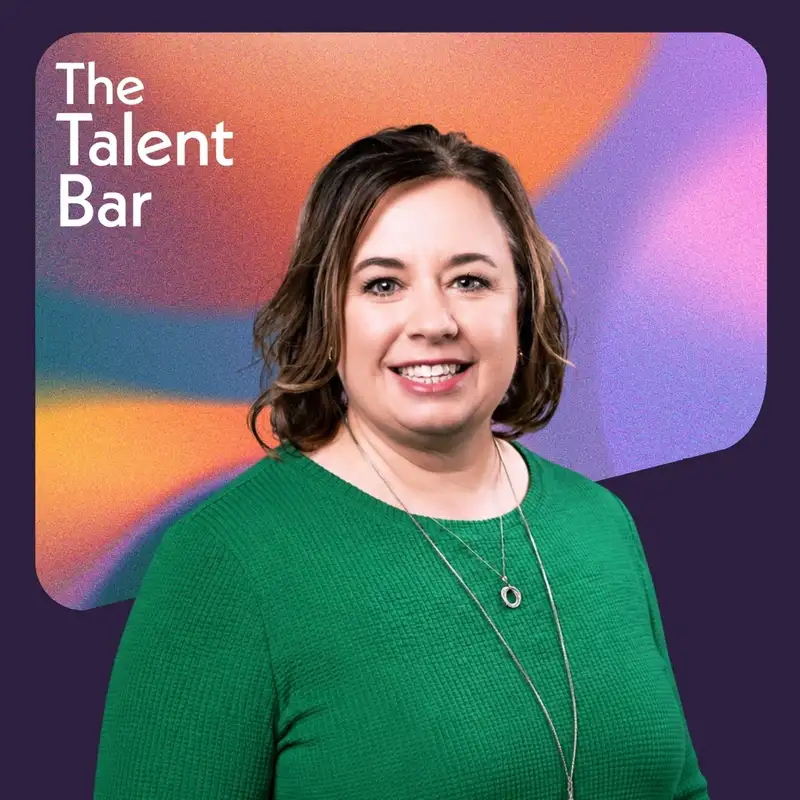
TTB - Jennifer Neef
===
[00:00:00]
squadcaster-ca1h_2_08-18-2026_140841: Hello everyone, and welcome to today's episode of "The Talent Bar." I'm really excited to have our guest today. She has spent over 20 years at the University of Illinois, which happens to be my alma mater. Go, go Illini go. Um, building one of the largest career services operations in the country.
She works with 40,000 students a year, coordinates over 150 career professionals across campus, and has a front row seat to one of the biggest questions in hiring right now, um, just around, you know, where AI can write your cover letter, apply to 500 plus jobs for you, and make every [00:01:00] person sound the same.
How do you figure out, uh, who's real? So we'll talk a little bit about that. Um, you know, she's not sitting in the seat as a recruiter right now. She's the person on the other side preparing students for the hiring process that our audience, um, runs every day, and she has some, some interesting things, um, to share about that.
She started her career in animal science and 4-H education, which is not the path, um, a lot of people might expect to lead her here, but 23 years and 8,000 graduates a year later, years later, um, she's one of the most connected people in terms of what's actually happening with early career talent. She's currently the executive director for career services at the University of Illinois, uh, Urbana Champaign.
Jenny Neff, welcome to the show.
squadcaster-6119_1_08-18-2026_160840: Thank you for having me, Colleen. I'm, I'm excited to share my perspectives today
squadcaster-ca1h_2_08-18-2026_140841: Yeah. Um, so, you know, obviously U of I, as, as I call it, um, as, as most people call it, [00:02:00] i- is a very large, um, campus. You know, I think you have, um, you know, they're graduating over 8 to 9,000 students a year and have more, more than 60,000 people on campus. Right now, um, there's a narrative that college hiring is down, and it's really hard for new grads to find jobs.
You know, you're sitting at one of the biggest universities in the country watching this happen in real time. Like, what's your perspective on this, or what do you see actually happening?
squadcaster-6119_1_08-18-2026_160840: Yeah. So I, I do want to acknowledge that I think it is a challenging environment for students to a job. Um, it takes an investment of time and, and thought and, and care to land. Um, and whether that's, uh, for an internship, like we're getting ready to ramp up internship, uh, recruiting season, or for those that maybe [00:03:00] graduated a, a handful of months ago and still are looking for that first full-time job. I think what I do see, though, is that there's just so... that, um, hiring is slower because there's so much uncertainty
squadcaster-ca1h_2_08-18-2026_140841: Hmm.
squadcaster-6119_1_08-18-2026_160840: Of the work that will need to be done. It is changing very rapidly, within organizations. Uh, how much work needs to be done by a human? What is that work? I think it's that level of uncertainty where what was normal
squadcaster-ca1h_2_08-18-2026_140841: Yeah
squadcaster-6119_1_08-18-2026_160840: no longer normal, and it's just this-- it's influencing the whole process
squadcaster-ca1h_2_08-18-2026_140841: Yeah. Yeah. The employers are not entirely sure what they're looking for, and so therefore they're being a little bit more cautious and slow because they need to figure that out. It, it's funny, I saw a headline yesterday, I don't know if you've heard this. Um, [00:04:00] it said something like KPMG is restructuring how they're gonna do their internships.
Instead of it being like an eight-week internship in the summer like we've typically seen, they wanna do like an eight to 10-month internship, I guess alongside someone's senior or, or final year of school, and, um, use that as a way to understand a little bit more about how somebody works. Um, have, have you seen anything like that or have you seen any changes in, in how people are approaching internships or how they assess whether or not, um, candidates are the right fit?
squadcaster-6119_1_08-18-2026_160840: Well, I had not heard that, but in some ways it's not surprising. And I think that have that model here on campus with our adjacent, uh, research park. We have
squadcaster-ca1h_2_08-18-2026_140841: Mm-hmm.
squadcaster-6119_1_08-18-2026_160840: Of students that intern, um, in Research Park, many of them at very large companies. spend the summer doing their internship, and then [00:05:00] many of them work several hours a week c- um, simultaneous to while they're engaging in their class w- uh, class- courses, in their coursework. so I think it does provide a much more in-depth snapshot of capabilities of the students, um, maybe even creativity in a way that you can't capture or some- an, an organization can't capture in three months. and I think it buys employers time at
squadcaster-ca1h_2_08-18-2026_140841: Yeah
squadcaster-6119_1_08-18-2026_160840: i- in what the world of work is in terms of determining what are their talent needs and, and where, what are the roles they're going to fill.
So it's not surprising, and I think we see it in little pockets. Um, in some ways it's a new twist on the traditional engineering co-op,
squadcaster-ca1h_2_08-18-2026_140841: Mm-hmm.
squadcaster-6119_1_08-18-2026_160840: Students would actually lay out for a semester [00:06:00] to engage in practical experience. I think we could see lots of new models, uh, emerge in the very near future
squadcaster-ca1h_2_08-18-2026_140841: Or do students get, uh, course credit for that type of thing, or is it, is it just paid?
squadcaster-6119_1_08-18-2026_160840: Um, on our campus, it varies really, really widely. Um, have to pay to pursue course credit in some ways. And so it, it-- You know, it, it-- Think, uh, we encourage students to really think through what the added value is to them for pursuing course credit for these types of practical experiences and make an intentional decision. Obviously, we have a handful of programs that require practical experiences, and in those cases, course credit a channel to earn that course credit i-is built into the curriculum. But other times, it's pretty [00:07:00] much an optional, uh, pursuit for students.
squadcaster-ca1h_2_08-18-2026_140841: Yeah. Yeah. I mean, I would've, I would've liked to have some money coming in from, from, uh... Who did I do my... I did my internship with Abbott Labs. It would've been nice to, uh, continue to earn, earn Abbott Labs money while I was a student.
squadcaster-6119_1_08-18-2026_160840: Yeah. Yeah. For sure.
squadcaster-ca1h_2_08-18-2026_140841: So
squadcaster-6119_1_08-18-2026_160840: For
squadcaster-ca1h_2_08-18-2026_140841: can't complain about that. Um, I, I guess in term- you know, a lot of what the narrative has been is around, um, it, it... And I think some of the reason employers are, are still figuring out what they need is because of this, a little bit of the shock to the system from AI and, and really what it means for how people work and, and what roles are.
I'm, I'm curious how you're seeing that, um, impact, you know, what types of applications and, and behaviors you're seeing from students. I think one of the things we talked about is, um, [00:08:00] what you have seen is some students will, will use AI to do sort of the high volume applications and, um, what are you seeing there, and what's the best advice you have for students who may think that that's the right approach?
squadcaster-6119_1_08-18-2026_160840: Yeah, I, I think the distress that some students feel, um, as they are pursuing jobs and internships is catalyzing the behavior of I'll just apply to everything and hope that something sticks.
squadcaster-ca1h_2_08-18-2026_140841: Yeah
squadcaster-6119_1_08-18-2026_160840: Um, it's almost like playing a game of odds. The more I apply, the more likely. And, um, in our coaching practice, we actually, um, encourage students to do the exact opposite, that in, um, a field or in an applicant pool where many, many applicants are using these emerging AI tools to apply, um, to submit documents that [00:09:00] everyone can look the same. And so we're spending a lot of our time helping students really think through what are their interests, what are their values, how, how are their skills aligned with, um, what the needs of employers, and, um, figuring out their own authentic self in that, and then using that as a foundation to build a job search strategy that's really targeted and focused and intentional, that leaves time and, and space for outreach and networking and real human connection rather than spending the time building a bot, if you will, to apply to anything. But it's scarier, it's harder, it's-- requires longer term investment before results are seen
squadcaster-ca1h_2_08-18-2026_140841: Yeah. [00:10:00] Do you think that that advice is resonating? Are you seeing behavior change?
squadcaster-6119_1_08-18-2026_160840: I think for the students that, um, are really deeply engaged with our services and are, um, using us as a guide and letting us walk along their job search journey, think it is effective and it is changing behaviors.
squadcaster-ca1h_2_08-18-2026_140841: When, um, tell, tell us a little bit more about just generally how your office operates and, and sort of what your, um, your scope is and, and how you, um, work with both students and, um, employers
squadcaster-6119_1_08-18-2026_160840: Yeah, so we'll start on the student side. Um, our work with students, um, is focused a- across their entire life cycle here. Um, a good chunk of our work is focused in on, um, [00:11:00] exploration and, and gaining self-knowledge and knowledge of options and opportunities. So really helping students think through who they are and, and what are their career aspirations and, and how is their experience here at Illinois aligned with those. Um, how can they use their experience here at Illinois to build the skill sets and competencies that employers will value. And so we do, um, that foundational work with students. And then as time, you know, moves through or as a student moves through their time here, certainly helping them think through what kind of experiential learning opportunities are aligned with their interests or their professional aspirations, and that looks different for different students. Um, you know, certainly the students that are looking for, you know, the world of work after graduation, really thinking through the, the more [00:12:00] formal internship
squadcaster-ca1h_2_08-18-2026_140841: Yeah
squadcaster-6119_1_08-18-2026_160840: particularly if they want to go work for a large organization who's using their internship program as their full-time... as a pipeline to their full-time roles. Um, we also work with a, a third of Illinois, um, of, of bachelor's degree recipients go on to graduate in professional school. And so those experiences that students are wrapping around their courses look different if they're on a path to pursue, know, a professional degree in medicine or nursing or, or dentistry, or someone who wants to pursue a master's or a doctoral degree.
And so helping students think through what do they want their experience to be so that it informs their career decisions, either affirmatively or, r- know, causes a pivot, and then they can build some skills and competencies along the way.
squadcaster-ca1h_2_08-18-2026_140841: Yeah
squadcaster-6119_1_08-18-2026_160840: And then of course, at the very end, helping [00:13:00] them apply and pursue for those opportunities, developing an appropriate search strategy, um, compelling application documents, getting through the selection process. all of our work. Um, on the employer side, we facilitate connections. So we provide channels for student-- uh, excuse me, for employers to hopefully find right fit talent for their organizations. And, um, we do that in a variety of ways, um, through, you know, traditional job boards and career fairs and recruiting activities. Um, we're also increasingly finding opportunities for employers to contribute to the educational experience for students by providing classroom projects, um, delivering our career education workshops. Um, those kinds of avenues, while we see them as part of the career development process for students, we also know that it [00:14:00] can be really beneficial for stu- uh, for
squadcaster-ca1h_2_08-18-2026_140841: Yeah
squadcaster-6119_1_08-18-2026_160840: are building their brand and building connections, authentic connections, um, with, uh, students that may be well aligned with their roles.
And, and that authen- authentic connection, I think, is what's really, you know, the, the, the game changer at this moment in time with the process that's riddled with lots of AI influence.
squadcaster-ca1h_2_08-18-2026_140841: uh, you shared some stats with me when we've spoken previously around, um, the sort of the hiring metrics or, or the sizing of companies. And I, you
know, when I was on campus and I, I graduated from the, the business school, and really the, the main companies that were hiring there were, what was the big five at the time, so I'm dating myself a little.
Abbott Labs, Eli Lilly, some of the bigger, um, pharma companies as well. But you had shared with me that there's only about 50 employers that are hiring five or more graduates a year, [00:15:00] and that there are over 1,000 companies that hire just one or two. Like, h- how are you seeing that shift over time and, and where do you see some opportunities for both candidates and companies there?
squadcaster-6119_1_08-18-2026_160840: Yeah, I, I think, um, any time that there's a, um, some friction in the labor market, that's what I'll call it, um, we, we tend to see the very large employers pull back and, and be more conservative in their hiring. And so when that happens, we know that there will be opportunities in small to mid-sized organizations or organizations that do not have a consumer brand. so some of the work that we're doing specifically in my unit here on the campus, or that we intend to do, is how do we help increase the visibility, surface those opportunities that may not come with a consumer brand or a name brand for students? we know that a large percentage of our students, um, who go [00:16:00] to the world of work, s- remain in the state of Illinois, and there are lots of opportunities, particularly in the metropolitan areas within the state, not just Chicagoland, but the others downstate, where students can find, um, meaningful work and, um, positions that are aligned with their goals and their interests. And how do we build that bridge? Um, not only for students, but also for those employers. These employers typically don't have large talent acquisition, you know, uh, departments within their organization. And so it's, uh, how do we help them identify and find the right fit talent when they don't have the same kind of infrastructure or people power that some of the large organizations have? So that's, that's a challenge for us, is
squadcaster-ca1h_2_08-18-2026_140841: Yeah
squadcaster-6119_1_08-18-2026_160840: we... can we be an effective partner for those kinds of organizations?
squadcaster-ca1h_2_08-18-2026_140841: I mean, I, you know, [00:17:00] I was talking to, um, I had a, a guest on previously who was at a, um, a company that I think people wouldn't necessarily... At, at the, uh, Hanwha Philly shipyard. And, you know, often in the past, people wouldn't necessarily think, "That's a place I wanna go work." Maybe, um, particularly in some, like, more engineering type of roles.
And he was saying it's been a really great opportunity for them in the last few years because they're getting, you know, the opportunity, particularly with, um, early career hiring, um, they're getting higher acceptance rates from people who have gone through their internship programs and, um, just, you know, full-time offer acceptance rates for them.
And so they've been really excited to, to be able to get access to, um, potentially talent that they might not have been in- been able to as some of those larger employers are, are pulling back. So, um, makes a ton of sense, and I think a lot of it is, to your point, just building up that employer brand. I, you know, I [00:18:00] know a- at least when I was there, and again, coming out of school with a finance or accounting degree at University of Illinois was, um...
You know, the big, the Big Five and, and sort of the associated consulting firms around them were sort of the, um, the prime places that people wanted to work or some of the large financial institutions. But, um, you know, I know people who went on to have really interesting, fun, fulfilling careers at places that were much smaller, um, and also had more of an opportunity to make an impact.
squadcaster-6119_1_08-18-2026_160840: Yeah. Yeah. In some ways, this, um, emergence of AI in the process lead to some advantages to the small and mid-sized organizations, if students can dig in and really think about, what are my interests? Where are my skills? Where can I see myself? And, and, and do the work [00:19:00] to figure out those authentic connections, the real alignment between, um, what the student brings and their interests and with broadly
squadcaster-ca1h_2_08-18-2026_140841: you shared this, uh, the acronym NACE. Um, what does that stand for again?
squadcaster-6119_1_08-18-2026_160840: Yeah. So it's the National Association of Colleges and Employers, and it brings together early career, um, talent and career services
squadcaster-ca1h_2_08-18-2026_140841: I was looking at some of their data and one of the things, um, I think it was from 2025, it said that, um, people who had done an internship were 2X more likely to have gotten a full-time role than the folks that hadn't. Um, what do you think is behind that?
squadcaster-6119_1_08-18-2026_160840: Hmm. That's a good question. Well, I think it's a, it's, it's a, it's a signal to the employers that, um, students [00:20:00] have, have some sort of practical experience aligned with their career interests.
squadcaster-ca1h_2_08-18-2026_140841: Mm-hmm.
squadcaster-6119_1_08-18-2026_160840: And so students have tested out the world of work. They have, had a s- set of responsibilities and tasks and deliverables, worked in a team in a, in a work setting usually, responded to a supervisor. so I think it signals that the student has some sort of understanding of the world of work in, in a professional, maybe sort of, uh, occupational setting.
squadcaster-ca1h_2_08-18-2026_140841: Mm-hmm.
squadcaster-6119_1_08-18-2026_160840: Uh, so I, I think it's assurance for employers. It signals that, um, the student may be, uh, ready to come in and, and succeed in their organization. I think the other thing is the student has had that experience, and they are better positioned to make a well-informed career decision about what is it that they are looking [00:21:00] for as they launch into the world of work after, um, after an internship. And so they're better positioned to tell their story and can, um, better describe their motivation and what it is they're looking for from an employer.
squadcaster-ca1h_2_08-18-2026_140841: Are you finding, given the changes in the, um, sort of hiring dynamics maybe where, where you're having, you know, less well-known brands are, or just the market being a little bit more challenging for students, are you finding people are using career services more than they were before?
What does that flow look like or, or trend look like for you all?
squadcaster-6119_1_08-18-2026_160840: That's a fascinating question. so this is-- now that I think about it, this is the first time in my career when there's been, I'm gonna call it a challenging labor market, where student engagement has stayed strong in career services. In previous recessions, um, my sense is that students, [00:22:00] believed there were no jobs, and so I'm just not going to engage career services.
I'm not gonna try. I'm not gonna be successful. I, I think it's different this time around, and I think, I think that maybe, uh, because there are still-- employers are still hiring, we're not in a recession like we
squadcaster-ca1h_2_08-18-2026_140841: Yeah
squadcaster-6119_1_08-18-2026_160840: been in, in the past, at least during my career. think students come to college with, um, with career interests in mind.
Um, data indicates that the number one reason students are coming to college is related to, uh, the career opportunities. And so I think that we have some of that influence that students are going to deeply engage because they're trying to
squadcaster-ca1h_2_08-18-2026_140841: Yeah
squadcaster-6119_1_08-18-2026_160840: their education to get to where they want to go as it relates to their career
squadcaster-ca1h_2_08-18-2026_140841: you talking about that sort of makes me go somewhere in my mind, which is like, um, you know, when I talk to a lot of talent acquisition leaders within private [00:23:00] organizations, how leadership of the organizations that they're in view talent acquisition can be mixed sometimes, um, where, you know, I've, I've had people say, "Well, you know, our CEO or our, our leadership team was really, um, interested in what was happening with talent acquisition when, you know, we were hiring for thousands of roles every year, and so now that we're hiring less, there's maybe not as much of a focus."
I'm curious, it, it, so it made me think of in a, in a setting, educational setting where so many people are coming to college to help, you know, further their professional development and, and move into the world of work, like w- what are some of the things that you think are important to the leaders within the university overall when it comes to this?
Do they look at, um, placement rates or, um, is there sort of like a satisfaction score or something that the, that [00:24:00] the university looks at? Or like, what are, what are some of the things that you all look at to, to sort of see how, um, how students are viewing like, uh, almost like the ROI on their education?
squadcaster-6119_1_08-18-2026_160840: Yeah, I, I think it shows up in, um, differently in different disciplines. Um, you know, the College of Business here and everywhere has long been focused on the metrics of where are students landing, and it's been part of their culture, for as long as I've been doing this work. Um, I think it may change a little bit in our high tech or engineering degrees.
I think at, this moment in time, I think in the past, there was strong belief that as long as we're providing students with these core technical skills, we know they're going to land,
squadcaster-ca1h_2_08-18-2026_140841: Hmm.
squadcaster-6119_1_08-18-2026_160840: Um, for students that are [00:25:00] coming from, you know, college of engine- colleges of engineerings and, um, are of similar caliber to the University of Illinois.
The technical skills were enough to have them land. I think there, there may be a little bit of a shift, like the technical skills are going to have to come packaged with some other skills and competencies in order to, um, succeed in the labor market now, um, particularly as technology is doing some of the tech work
squadcaster-ca1h_2_08-18-2026_140841: Yeah
squadcaster-6119_1_08-18-2026_160840: engineers used to do. Um, so yeah, empl- uh, campus leaders are looking at who are the employers that are coming, what skills and competencies, um, are they, um, expecting that our students will have when they leave our campus. Um, I think the social sciences and the humanities have been focused in on [00:26:00] understanding how the world of work connects to these disciplines that don't have a direct path to a specific occupation or vocation. And, uh, career services has been in the middle of that work of helping students translate their degree in sociology to some sort of occupation, you know, at the bachelor's degree level.
squadcaster-ca1h_2_08-18-2026_140841: Yeah
squadcaster-6119_1_08-18-2026_160840: a- and so I think that it, um, how campus leaders look at it, it looks different from
squadcaster-ca1h_2_08-18-2026_140841: Yeah
squadcaster-6119_1_08-18-2026_160840: discipline to discipline. our campus leadership is always excited to talk about where our students are landing, average salaries. You know, we want to tell that story. Um, but when you get into the weeds of how that plays out in the day-to-day, it looks a little
squadcaster-ca1h_2_08-18-2026_140841: Yeah.
When you're, when you're talking about, um, some of the way it might be changing, particularly in some of the [00:27:00] more technical roles that it reminds me of one of our, uh, our conversations before this call around the university is moving back to like paper and pencil, so to speak, for testing. Um, and would love for you to share a little bit more about what, what the trends are there and what you're seeing a- and really why you're seeing, why you think you're seeing those
squadcaster-6119_1_08-18-2026_160840: Yeah. I just l- had the opportunity to, um, hear a faculty member from political science talk about this, um, in the courses she's teaching. And so she definitely is using all of the emerging technology in the way that she teaches and the way that students are doing work for the courses. And, um, sh- I think she's probably on the emerging, uh, bleeding edge for teaching and learning and use of AI. And her mantra is, "But it's absolutely [00:28:00] essential that we have paper and pencil exams so that we can assess, as an institution, are students actually learning?" Not only are they learning the content of whatever the course is, is, is focused on, but also, you know, are... I- I- I-- The paper and pencil exam can also signal how, how much, um, are students effectively using the emerging technology in the way that they're learning.
squadcaster-ca1h_2_08-18-2026_140841: Yeah
squadcaster-6119_1_08-18-2026_160840: we're also seeing a little bit of that in, um, in, uh, like, uh, admit- this, the admissions process for medical school much more, um... I shouldn't say much more, but certainly a little bit of a trend away from the technology, away from the virtual. The LSAT going back to... It's still gonna be delivered online, but you c- students have to go to a testing center
squadcaster-ca1h_2_08-18-2026_140841: Mm-hmm.
squadcaster-6119_1_08-18-2026_160840: Sit for that exam. [00:29:00] And so I think that technology is going to force, reconsideration of these assessment strategies that have definitely, you know, forward in what the technology enabled us to do, and maybe we need to pull back that our assessment of learning is sound.
squadcaster-ca1h_2_08-18-2026_140841: Yeah. And, and it ties back into, you know, what we were talking about with the, you know, why people want to hire folks that have done an internship, right? It's like you wanna be able to see how people are working and that they're learning. And, you know, we've, we've all experienced AI has now been around enough that it, you know, we know when people are using it, and we, we generally know when people are using it, and we really still need to know whether or not people can make good decisions, use sound judgment, and [00:30:00] those are just the things we don't wanna outsource to technology.
So in a lot of ways, it's not surprising to hear that people are going back to, back to pen and paper because it is the thing that we wanna make sure folks are leaving college having, and I think that is going to continue, making it desirable for employers to want to come and continue to do the hiring at the levels that they used to do before. I think the-- You know, I-- Speaking from my experience, you know, I, I graduated with a finance degree, and I started my career with PwC, and I was doing a lot of work that I think would be considered menial and is probably gonna be automated in some ways with AI.
But it was also how I learned how a business operated. You know, if I had to do invoice testing as part of a, a diligence process, like I really understood what the company was selling, how it made money, and all these things. Um, and so I think it's so much more important now that as we're leaving uni- you [00:31:00] know, as students are leaving university, that they actually have a better handle on, on the content and the, and sort of the, you know, structures of learning and, and things like that.
So I love hearing that.
squadcaster-6119_1_08-18-2026_160840: Yeah. You mentioned, um, you know, how you learned the organization when you, um, launched your career after earning your degree here. Um, you mentioned NACE. So at the NACE annual conference in June, Lindsey Pollak, who, um, has long been an expert and thought leader here in this space, challenged us to go back to our teams, uh, particularly those of us that are working in multi-generational teams, a conversation about what technology looked like you started your career. And it's a fascinating exercise, um, a- and as technology has become just completely infused in our everyday lives, we don't have [00:32:00] cooler where new hires can listen and observe and hear how the work of the organization gets done.
squadcaster-ca1h_2_08-18-2026_140841: Yeah
squadcaster-6119_1_08-18-2026_160840: Um, it's, it's just really fascinating the environment and the way that work gets done and the tools that we use have changed, but people still have to learn how w- to be successful in doing their work at a particular organization.
squadcaster-ca1h_2_08-18-2026_140841: And I think it's also, you know, I, I would imagine, um, a lot of what employers are thinking about right now too, particularly some of these, um, types of companies that we see as, uh, incubators of early talent and moving, you know, that can move up into the organization and continue to grow their organization, right?
You need that, uh, that... I'm, I'm, I'm missing the word, [00:33:00] right? But you need that talent, um, pool to continue to pull people up into the organization, and if we see this slowing of hiring of, um, you know, early ed- early career, what is it gonna look like in eight to 10 years from now when you don't have any of the people who you've sort of coached into these broader roles when- in the organization?
I'm curious if you've, um, heard any, you know, commentary or, or what people might be talking about in that space.
squadcaster-6119_1_08-18-2026_160840: Um, not specifically, but I think that, um, it's always a fascinating conversation when we think about a, a specific hiring manager and they're looking to fill a role and someone who can do the job at hand, whatever that may be, versus, another person within the, you know, talent acquisition space thinking about [00:34:00] who are the leaders, who are the managers of the future, and h- do we, how does an organization have the right channels, the right pipelines, the right decisions to identify those people in addition to the folks that are needed at this moment in time?
And can it be both? Can, can the hiring include both?
squadcaster-ca1h_2_08-18-2026_140841: Mm-hmm.
squadcaster-6119_1_08-18-2026_160840: Um, I, I think there's long been that tension that happens,
squadcaster-ca1h_2_08-18-2026_140841: Yeah
squadcaster-6119_1_08-18-2026_160840: and this technology is going to further influence that or, yeah, impact that, that tension.
squadcaster-ca1h_2_08-18-2026_140841: Yeah
squadcaster-6119_1_08-18-2026_160840: And I think we can learn from history. Like it's not the... That we've had some pretty significant recessions that result in an extreme pullback of career hiring.
And, um, there's probably people listening to the podcast that can talk about what that does to an [00:35:00] organization. They've lived it
squadcaster-ca1h_2_08-18-2026_140841: Yeah. I mean, I, you know, I, uh, again, not to date myself too much, but I graduated in, you know, in the spring of 2001, which was, uh, you know, sort
squadcaster-6119_1_08-18-2026_160840: Yeah
squadcaster-ca1h_2_08-18-2026_140841: um, not the best time to be in the job market. And luckily, because u- you know, I used, uh, on-campus career services, I had had a job lined up for a while, but the reality was it didn't matter.
One of my, um, you know, somebody I had interned with who was supposed to be starting at another large, um, consulting firm, I was, um, in the mall shopping, you know, a couple weeks before I was supposed to be starting my new, my new job for some professional clothing, and she was working at Banana Republic because her offer had gotten pulled.
Um,
squadcaster-6119_1_08-18-2026_160840: Mm-hmm.
squadcaster-ca1h_2_08-18-2026_140841: And, and even in my, um, situation, you know, my, I started my career with PwC, but we were sold to a much smaller... Our group was, was sold to a much smaller consulting firm, and they paused on-campus hiring for a year. And it sucked because I didn't have that, like, n- junior person [00:36:00] coming in behind me to train.
And so what I ended up doing was the work of, the reality was the work of two people. And if they had gone another year without letting us hire another class of people behind me, there's no way I would've stayed. So I think, um, generally, you know, my experience at least was it was short-lived, and there was this realization that you needed to bring in the more junior talent so that you could have people, as they were getting more experienced, moving up and working on more strategic things and, um, and doing the more complex things that you needed, you know, folks to do who had been around for a couple of years, and continuing to have me do some of the more entry-level stuff was just not, you know, it wasn't getting the best of me or, or, and the best for them either.
So, that definitely resonates with me that I do think that you have to... The, the word I was looking for earlier, pipeline. You definitely have to have this, this pipeline that you're filling, and there might be, um, [00:37:00] one or two years or two cycles where you can go with some gaps, but much longer than that, and I think you really erode the whole system.
well, I know, um, y- you said you were at this, at this conference recently, and you were on a panel, and someone asked you to complete the sentence, um, tell students to stop worrying about... And you said a 10-year plan. So sh- why?
squadcaster-6119_1_08-18-2026_160840: Well, I mean, who knows what opportunities may be, you know, available in the world of work 10 years from now. And there's just a whole lot of life that happens
squadcaster-ca1h_2_08-18-2026_140841: Yeah
squadcaster-6119_1_08-18-2026_160840: for, you know, human beings that are between 22 and, and, and 32 as they
squadcaster-ca1h_2_08-18-2026_140841: So true
squadcaster-6119_1_08-18-2026_160840: lives. And, um, we see so many students, um, you know, that come to us with this very specific vision of where they will be when they are, you know, 15 years into their [00:38:00] career. and they have a four-year plan while they're here on campus and then a, you know, a very, uh, narrow maybe pers- idea of what comes immediately after graduation. And it causes a lot of stress students and a lot of, um, uh, y- yeah, anxiety, particularly when reality doesn't match the four-year or even, or worse, the, the 10-year or 15-year plan.
squadcaster-ca1h_2_08-18-2026_140841: Yeah. Yeah
squadcaster-6119_1_08-18-2026_160840: really encouraging students to be resilient in the moment, to embrace opportunities that, um, may come their way that they cannot even imagine. and say yes when those come along, even if they're not exactly aligned with vision that they have for themselves.
squadcaster-ca1h_2_08-18-2026_140841: Yeah
squadcaster-6119_1_08-18-2026_160840: think that kind of mentality [00:39:00] and mindset will serve anyone well throughout their careers and probably their life
squadcaster-ca1h_2_08-18-2026_140841: Yeah. I love that. Um, I guess shifting to learn a little bit more about you, you started, um... Your degrees are in animal science from Kansas State and Michigan State, and you started as a 4-H educator at Purdue. Um, now you're running career services at one of the biggest public universities in the country.
Like h- tell, tell us more about how you got from, from there to where you are today.
squadcaster-6119_1_08-18-2026_160840: Yeah. So I guess my life happened too. Um, so, um, you know, my career goal when I was y- in college was definitely to work on a college campus working in non-formal education, 4-H and youth development. 4-H was a big part of my life and, and I saw my work doing youth development. And, um, I met my eventual spouse, and he was from Champaign, [00:40:00] Illinois, and he, he was in sales.
Went through a recession in '02, so he was right
squadcaster-ca1h_2_08-18-2026_140841: Yeah.
squadcaster-6119_1_08-18-2026_160840: And lost his job, and we were scratching our head with what comes next. I was doing that work in, in 4-H youth development work at Purdue and, um, he lost his job. And so we had a, a toddler and an infant, and we just decided maybe now is the time to move to East Central Illinois.
And I, I, I left a, a good and stable job and at a moment in time when there wasn't
squadcaster-ca1h_2_08-18-2026_140841: Yeah
squadcaster-6119_1_08-18-2026_160840: lot of availability of good and stable jobs. But I guess life happened and, um, uh, our College of ACES, so College of Agriculture, Consumer and Environmental Sciences, was launching a career services function. I was, uh, at the right place and the right time, and that opportunity, um, allowed me be [00:41:00] connected to my academic discipline and all that academic work in animal sciences, and called on my experience doing 4-H and youth development programming, so doing educational, programs outside of the classroom. And I got lucky. I mean, I had somebody that believed in
squadcaster-ca1h_2_08-18-2026_140841: Yeah
squadcaster-6119_1_08-18-2026_160840: um, um, bought into my motivation and, um, believed in my skill set to do the job, and I got the job. I got the offer. And I've been here for, wow, I think yesterday was 24 years
squadcaster-ca1h_2_08-18-2026_140841: Wow. Congrats
squadcaster-6119_1_08-18-2026_160840: a- and so, yeah, I-- I left, uh, Kansas State University with my degree in animal sciences, if somebody had told me, years later, this is what you would be doing," I would've
squadcaster-ca1h_2_08-18-2026_140841: Yeah.
squadcaster-6119_1_08-18-2026_160840: Thought they were crazy.
squadcaster-ca1h_2_08-18-2026_140841: Yeah.
squadcaster-6119_1_08-18-2026_160840: Here I am.
squadcaster-ca1h_2_08-18-2026_140841: Yeah. Okay, well la- last question, it's the most important. So you graduated from K-State. [00:42:00] You said your, your son is now going to be starting there this fall. Um, K-State versus Illinois in, you know, whatever sport, who are you rooting for?
squadcaster-6119_1_08-18-2026_160840: Um, I, I really like the orange and blue. Our
squadcaster-ca1h_2_08-18-2026_140841: Yeah.
squadcaster-6119_1_08-18-2026_160840: Has been pretty darn
squadcaster-ca1h_2_08-18-2026_140841: Yeah.
squadcaster-6119_1_08-18-2026_160840: Um, Coach Beilein has got our football team rolling. So anyway, um, I know where my paycheck comes
squadcaster-ca1h_2_08-18-2026_140841: Yeah.
squadcaster-6119_1_08-18-2026_160840: And it's pretty easy to, uh, cheer for the Illini right
squadcaster-ca1h_2_08-18-2026_140841: Yeah
squadcaster-6119_1_08-18-2026_160840: I will say my son is super excited about, um, the quarterback and new coach at Kansas State University.
So we'll see. Maybe they will
squadcaster-ca1h_2_08-18-2026_140841: Yeah.
squadcaster-6119_1_08-18-2026_160840: That ship
squadcaster-ca1h_2_08-18-2026_140841: Yeah. Maybe in a couple years we'll have a good,
squadcaster-6119_1_08-18-2026_160840: Yeah
squadcaster-ca1h_2_08-18-2026_140841: good battle. Um, well, this was so thank- so great. I really appreciate you, um, taking the time to do this and, you know, uh, I think it's always important to [00:43:00] remember where people are getting started. And we talk about the talent pipeline and, you know, I know for me, career services at, at University of Illinois was incredibly impactful and largely, um, like I said, you know, m- my path would've looked a lot different without it, and so I'm very appreciative of all the work that, um, that you all are doing, especially, you know, I probably wasn't, and, and even, you know, peers of mine weren't the easiest to be dealing with at the age of 20.
And so I, I have a lot of respect for, for the, the work that you're doing, and am really grateful for it, and I just really appreciate you taking the time to, to join me today
squadcaster-6119_1_08-18-2026_160840: You're so very welcome
squadcaster-ca1h_2_08-18-2026_140841: If people want to connect with you, what's the best way to find you?
squadcaster-6119_1_08-18-2026_160840: Uh, LinkedIn probably. Um, and then I, I, I still use old, old-fashioned email,
squadcaster-ca1h_2_08-18-2026_140841: yeah.
squadcaster-6119_1_08-18-2026_160840: Just, just it's out there. You can find it.
squadcaster-ca1h_2_08-18-2026_140841: Yeah. Yeah, I did. Um, [00:44:00] well, uh, again, thank you so much for joining me and, uh, to all my listeners, if you learned something new today or laughed, please tell somebody about this show, and thank you again for listening