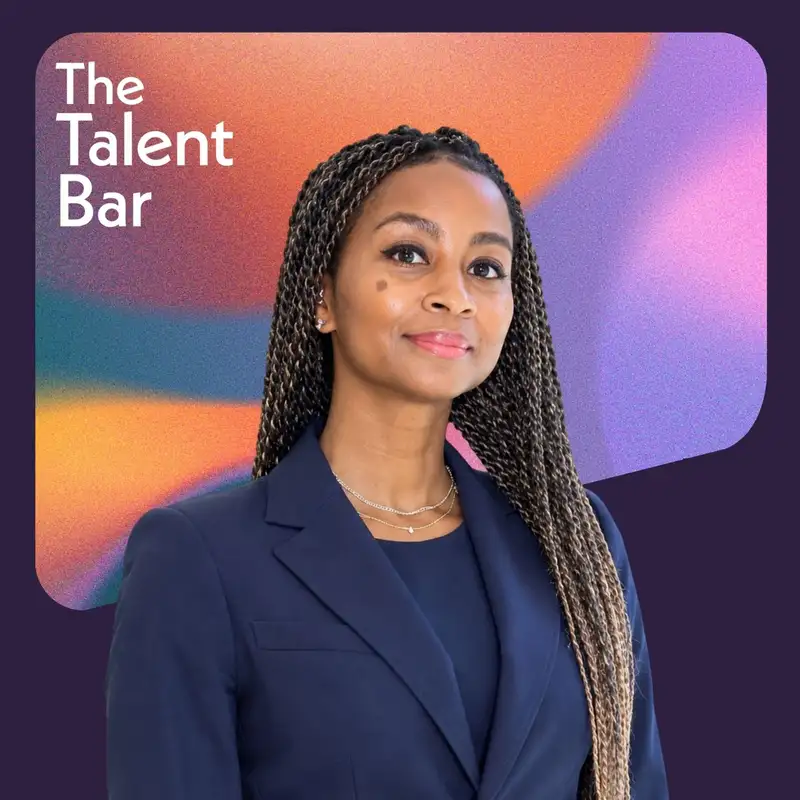
TTB- Britt-Angela (Williams) Ward
===
[00:00:00]
colleen-gallagher_7_10-02-2026_104537: Hello, everyone. Welcome today, to today's episode of "The Talent Bar." I'm really excited to have our guest. She has done it all in recruiting. She ran her own boutique staffing firm for over eight years, placing everyone from paralegals to attorneys at foreign consulates.
Uh, then she went in-house at one of the largest health systems in the country, where she built recruitment operations across Florida, Texas, and California. Now she's leading talent acquisition at a r- health system in rural North Carolina, next to one of the largest military bases in the United States, and she's turned her team into one of the top performing, um, AI-powered sourcing [00:01:00] tool users globally.
So we'll talk a little bit about that. Uh, she has a framework she calls the four E's, and she believes the most expensive thing a recruter- recruiter can do is to not pay attention. She's currently the corporate director of talent acquisition at Cape Fear Valley Health. Britt Angela Williams-Ward, welcome to the show.
britt-angela-williams-ward_1_10-02-2026_134537: Thank you. Thank you, Colleen. I'm excited to be here
colleen-gallagher_7_10-02-2026_104537: so the question I love to start off with is, what's the one thing or one action that you think sets the best recruiters apart from the rest?
britt-angela-williams-ward_1_10-02-2026_134537: Well, you have to be, um, inquisitive, right? I think that is the one thing you have to have. Ask the right questions. And so to ask the right questions, you have to be inquisitive
colleen-gallagher_7_10-02-2026_104537: Yeah. Yeah. And you t- you talked about, um, you, you've also shared with me, like, this, uh, the thing around attention to detail and how, um, you know, you shared some, some examples about like even if it's not the right time for a candidate right now, but remembering what was important to them and the details of them can help you later [00:02:00] on.
So how do you think about that when you, um, when you're building out your recruiting team?
britt-angela-williams-ward_1_10-02-2026_134537: So, you know, I remember when I was a recruiter, um, one of the things I would always hear from, uh, people that I was recruiting was that I paid attention to the details. I, um, I remembered things about them that other recruiters didn't remember. So if I, you know, Colleen, you came to me and there was a certain position I set you up to interview for, and you decided not to take that role, or they decided not to hire you, there was...
I always had a file on everyone that I, I took down notes. I was very inquisitive, but I paid attention to the details. And so then when the, another position came up that I remembered you were interested in, I would call you, I'd reach out. And, um, the recruitee would always say, like, "I can't believe you remembered me.
This is a perfect job for me. This has never happened before, you know? I just think like recruiters think that we're just like numbers, but you really pay attention to the detail." And so when you're working for yourself, right? Um, you know, we, we were talking before and I said, you know, you kind of, um, [00:03:00] eat what you kill,
meaning that, you know, you have got to, this is your business and this is your livelihood. So paying attention, if I didn't pay attention to the details, it was expensive because then I was missing out on a fee. Um, but the other part of it was I was building a relationship with the client, meaning the outside client who is paying the bill, and also the internal client, meaning my candidate, and making that match, it was, it's incredible.
It's an incredible feeling, but it's also great to hear from someone, "Can't believe you remembered that about me."
colleen-gallagher_7_10-02-2026_104537: you shared with me your framework that you call the four E's, so would love for you to share that with, um, our listeners. And then just tell me what that really looks like for you in practice at a health system
britt-angela-williams-ward_1_10-02-2026_134537: Right. Um, so for us, I think, um, experience is really important. And I say to people that I want the candidate and the clients to have an excellent candidate, an excellent experience day for everyone. So those are the four E's. Excellent [00:04:00] candidate and client experience every day for everyone. And it sets you apart because from the time that you apply for a job, so you see the position posted, um, out on whatever site that it's on, is it easy to apply? Um, have to then, do you have to fill out a whole application, or just can you have an easy apply where you're just clicking a link and sending your resume? And then from that time, that's easy. And then by the time the recruiter gets it, how quickly do they reach out to you and screen you? Was it a good interview? Did they ask you the right questions? Did they listen to your wants and your desires? Then from there, how quickly do we let you know that, you know what, maybe this position's not right for you, or we'd love to set you up with the, with our, with our hiring manager.
And so how many days pass between the time that you've applied, time you've been screened, and the time you're set up for an interview? And then once you've interviewed with our hiring manager, how quickly do we get back to you and let you know, um, that, "Hey, you're moving to the next round," or, or, "We'd like to make you an offer," or "Maybe this is not the right role for you." On the other side of it, [00:05:00] when it comes to our internal clients, our hiring managers, we listening to what their wants and needs are? When we're doing the intake call, are we asking the right questions?
colleen-gallagher_7_10-02-2026_104537: Yeah
britt-angela-williams-ward_1_10-02-2026_134537: asking that are not on the job description, saying to them, "Hey, so tell me what you really want.
What are the intangibles? You know, what, what's something that's not on this job description that you can tell me about this, this position that will set apart from someone else?" And when we ask the right questions, again, paying attention, um, then it's an excellent experience for the, for the client as well. Uh, so these four E's are essential for me as a leader, but also for my team, and that is what really has set them apart. Right now, we are in a situation where we have several leadership positions open in nursing, and we have been really successful in hiring external candidates who fit the bill. And I know, um, it's so funny because some of, two of these recruiters had not really hired leaders before, and I've kind of given them the framework on how [00:06:00] to hire a leader, and this is what we're going to put in place. Um, and they are so excited that, um, they're getting the, um, attention from the candidates for, on these roles, but also making those really key hires
colleen-gallagher_7_10-02-2026_104537: Do you, this is somewhat of a tactical question, but do you ask your hiring managers to do the first draft of the JD, or how do you get them involved in the process?
britt-angela-williams-ward_1_10-02-2026_134537: Right. So we have standard JDs, um, that are, uh, hospital-wide, um, health system-wide, I should say. And so what we do, though, we take the GD- the JD, and we ask the hiring manager to give us points that are not on the JD. And those keywords we use, um, we e- incorporate that into the JD and, but we actually incorporate it to the job posting itself, the externally facing job posting. We also use, uh, those keywords to tailor our actual intake form. Uh, so when we're interviewing the candidate, we're asking certain questions that are based on the keywords that we've received. [00:07:00] Another tactic we use is to sit in the interview with the hiring manager, just a couple of them. You want to hear some of the questions the hiring manager is asking and kind of understand the why behind it. Uh, I think it also help the recruiters understand a little bit more about the department for which they're hiring.
colleen-gallagher_7_10-02-2026_104537: Mm-hmm.
britt-angela-williams-ward_1_10-02-2026_134537: So that's something that I've always... When it's a new department to a recruiter, I ask for them, I ask them to ask their hiring manager if they would mind if they sat in on a couple of interviews. And what that does is two things. One, it shows the hiring manager that you are really truly invested in getting the right candidate for them. And two, it really, uh, that then helps deepen the relationship and the trust, the bond that a hiring manager and a recruiter need to have to be effective.
colleen-gallagher_7_10-02-2026_104537: often the biggest challenge with, you know, going back to the, the four Es with candidate experience is hiring managers and helping th- getting them to understand sort of the urgency in the landscape, particularly I would, I would guess in healthcare where, [00:08:00] um, speed is, speed is important. And so how do you, how do you help, you know, your hiring managers understand the sense of urgency, especially when you have a candidate who's probably also applying to, you know, a number of other health systems?
Like, what helps to get them to move faster?
britt-angela-williams-ward_1_10-02-2026_134537: so that is, that was a very sore point for me when I first joined the organization because they didn't understand, uh, system-wide the urgency getting back to a, a candidate. And part of it is because we are in a, um, we're in Fayetteville, and, uh, many of the employees have worked, only worked here, and they've worked... started their careers here. They've continued there. They've grown their careers here. And so they really probably didn't have to interview other places, and they don't really know what it's like, um, what the market, the job market's like
colleen-gallagher_7_10-02-2026_104537: Yeah.
britt-angela-williams-ward_1_10-02-2026_134537: So, um, having the sense of urgency that I have, that I have and that the recruiters have, we had to create a service level agreement. That's [00:09:00] best practice in any recruiting house. So we have certain, um, w- certain items that we have to live up to, and so we ask the, our hiring managers to partner with us with that. we ask for a 24 to 48-hour turnaround on interviews. Um, now do we always get that? No. But it w- it's a work in progress.
colleen-gallagher_7_10-02-2026_104537: Yeah
britt-angela-williams-ward_1_10-02-2026_134537: we've, what we've really shared with them is that, you know, for every one job that they're interviewing for with- within our wall, there might be two or three others that they're interviewing for, and will lose them.
And I think what really had to happen was a couple of times we lost candidates because we didn't have timely feedback. Um, and I, you know, and I said to, I said to our recruiters, I go, "You know, sometimes you have to let things happen, and then people will understand." And so it happened, and they understood. But we continue to remind our hiring leaders that, um, want people to have a really good experience when they come and interview with us, an excellent experience, and the way to do that is to give them feedback as soon as possible
colleen-gallagher_7_10-02-2026_104537: you've [00:10:00] shared your n- rural, rural market in Fayetteville, um, but it also has one of the largest military bases, uh, nearby in the country. Like, are, do you have a hard time convincing people to move there? Do you see a lot of turnover because of the, the standard, you know, whether it's a military spouse that ends up moving around a lot?
Um, how do you deal with, with that in that type of market?
britt-angela-williams-ward_1_10-02-2026_134537: That's a good question. So I'll take the second part first. Yes, we do see, uh, some moving around because military spouses have to follow their spouse, right? So they have to, they are to another, uh, they've been asked to go... Well, actually, they have orders to go to another state, uh, another city. Uh, we do have that type of turnover, uh, but that's to be expected, and it's just part of being in a military town. It's not as much as you would think it would be. I mean, it's, it's here and there that we have it, and sometimes the military orders are only for a period of time, and the spouse opts
To stay. Especially if they have [00:11:00] children in school,
colleen-gallagher_7_10-02-2026_104537: Yeah.
britt-angela-williams-ward_1_10-02-2026_134537: Then they're- Yeah so, and it's a stability that, um, that the family would need. Um, when you're asking about bringing people here outside of Fayetteville, so that was a bit of a challenge But what we did was we built up our, our brand. When I started, we didn't really have a brand that was known outside of Fayetteville or the surrounding areas, and we partnered with vendors to work on our recruitment marketing, our recruitment branding.
So much so that, um, on the, the top 20, we were not even in the top 20. We weren't even in the top 100. We drove the traffic to the place where we were in the top 20 of health systems in North Carolina. So health systems, but also healthcare companies. So that would include, you know, that includes like the retail pharmacies that some health, um, care,
colleen-gallagher_7_10-02-2026_104537: Mm-hmm.
britt-angela-williams-ward_1_10-02-2026_134537: Like if they give injections and things of that nature, or you can have a telehealth appointment. [00:12:00] Um, so we were able to drive that really through strong recruitment branding. And because of that, people started to take note of who we are and what we do. We also, um, opened, uh, in July of this year, an MD medical school in conjunction with Methodist University. And so that is another reason when you become an academic, you know, health center,
colleen-gallagher_7_10-02-2026_104537: Yeah
britt-angela-williams-ward_1_10-02-2026_134537: uh, take note and, you know, there's research that's done here.
So it's helped us, uh, an attraction to our market. But the other piece of it is cost of living is much less here,
colleen-gallagher_7_10-02-2026_104537: Yeah
britt-angela-williams-ward_1_10-02-2026_134537: much, much lower than any other place within North Carolina, but within the United States. we took that opportunity to create what I would call, not really a, a mailer or a flyer. We have a data sheet, and we just say, "Hey, moving here, this is what we can offer you."
There's a slower pace of living, a lower cost of living, and then with it, with that, we also combined it with our benefits. And part of what everyone's looking for is like what... I'm going to work somewhere, what are they gonna pour [00:13:00] back into to me?
colleen-gallagher_7_10-02-2026_104537: Mm-hmm.
britt-angela-williams-ward_1_10-02-2026_134537: We rolled out maternity, uh, fertile and maternal benefits, where we have four weeks of paid leave, and that has been an amazing, um, way to drive families here.
But the icing on the cake is that we have an on-site daycare.
colleen-gallagher_7_10-02-2026_104537: Yeah. Yeah.
britt-angela-williams-ward_1_10-02-2026_134537: So we've expanded our daycare, and that has actually been one of the cornerstones because, as you know, you're a mom, childcare is so important. And to be able to have your child on the campus where you're working, or on even if you're not working at this campus, but you know that it's safe, you can get to them quickly, is a big selling point for everybody
colleen-gallagher_7_10-02-2026_104537: [00:14:00] Yeah. I love that because y- you know, we see so often, um, how people are very focused on, on comp and salary, but the reality is, is when you actually look at it, right, there are all these other factors that people are really taking into account when they make a, make a decision about a job, and not everyone takes the highest paying job if it offers conveniences to their life, like a guaranteed spot in childcare.
Um, that's... And, you know, obviously paid, paid, um, parental leave is, is a huge differentiator, so it's such a good reminder of how important things like that are, especially in, in, uh, in recruiting and, and places that may not be as, um, you know, well known as, as some other parts, [00:15:00] um, of, of the country. You, you talked about, um, investing in people and, and showing people that you're, you're gonna do that.
I know you mentioned that you put your entire recruiting team through a certification course. Why was that important to you, and, and did you see, um, meaningful changes from that?
britt-angela-williams-ward_1_10-02-2026_134537: Yes. Um, so we put them through a course, and it was, we split the team, you know, it's like 10 and 10. Um, 10 did it, I think at the beginning of the year, and the other half did it at the end of the year. And a couple of things. You know, I think as a leader, you're, you're telling your team what's important, what they should, uh...
how to recruit, what you're supposed to look for, sometimes it's like you're talking to them and it's kind of like they're hearing you, but they're not hearing you. And so sometimes when you hear it from the outside, you pay a little bit more attention to it. And so what they... This course allowed them to train with other recruiters throughout the nation. so they were hearing best practices you know, [00:16:00] Colorado, Wyoming, New York, you know, Miami, wherever it was. And they were also able to say, "This is what we're doing as well." So you're sharing best practices. But this really showed, um, them the importance of a strong intake call with the manager,
colleen-gallagher_7_10-02-2026_104537: Mm-hmm.
britt-angela-williams-ward_1_10-02-2026_134537: Uh, importance of a thorough screening, the importance of asking the questions behind the question. And I really have seen, uh, an excellent return on the investment. Some of the, I would say, the careless mistakes, we talk about paying attention, that they were making in the, in the past, they're not making them anymore. And in fact, what I hear them say is, "Oh, we learned this in the course that this is a, a good way to do it."
And they give them really great tools to utilize. And so when a position's hard to fill, they start using these strategies that they learned, and it's more... It's no longer the, "Ah, I just, you know, BA, I can't. I've done everything. I can't find it." It's like, "Okay, what else can I do to try to, um, find the right person [00:17:00] for this role, even if it takes them a little bit longer?"
One of my team members said that she learned perseverance. Like she realized that, you know, it's not going to always happen in the 30 days. Um, it sometimes happens on the 35th day. But you've gotta keep going to be able
colleen-gallagher_7_10-02-2026_104537: Yeah.
britt-angela-williams-ward_1_10-02-2026_134537: Right, um, that right candidate
colleen-gallagher_7_10-02-2026_104537: shifting gears a little, we talked about, um, you know, I think generally speaking there, you know, I s- I've seen this over the last couple of years that when there was talk about AI adoption within organizations, often people said, "Oh, recruiting is one of the first places," because it's a pr- very, it can feel very process heavy.
Obviously working in healthcare you have additional consideration. Do you have to think about like how have you brought AI into your workflows and what type of value are you seeing it bring to the organization?
britt-angela-williams-ward_1_10-02-2026_134537: Right. So we are utilizing AI not to choose candidates, right? Not to exclude candidates, but to enhance, our recruitment experience. [00:18:00] we have-- we are utilizing it in a way that, I, I don't like the term ranking, but it does sort of show us a ranking of does this candidate fit what we've-- the output that we put out.
Do they, do they fit that? Is it a match? Uh, but how we use it that that's fine. It's showing us that they match, we're also screening all the other candidates as well. Because often I find, especially in healthcare, people do not update their resume
colleen-gallagher_7_10-02-2026_104537: Yeah
britt-angela-williams-ward_1_10-02-2026_134537: right, or people are updating their resumes, but do they have the skillset? Because what we've seen that people will take a look at what the res- what the, uh, job description says, and they've used AI to manipulate their resume, and so now they are perceived as the top candidate, but they don't have the experience to back it up. So there's still a human portion of it, but what it has done for us is to make us a little bit more efficient. we have seen the benefit is that if we have a position, uh, that's new [00:19:00] and, um, we're not getting the hits on it that we think we're gonna get out, out externally, we can use the AI. It can go in, and it looks at all of the candidates that have, that have ever applied, and surfaces these candidates, brings them back to the top. And these are candidates who, A, had an interest in our health system before.
colleen-gallagher_7_10-02-2026_104537: Yeah
britt-angela-williams-ward_1_10-02-2026_134537: Um, B, if it's, uh, in the past, perhaps they have more experience under their belt. Well, they certainly have more experience under their belt. Maybe they even have leadership experience, so maybe they'd be good for one of our leadership roles that we have. And C, it reduces the marketing, the recruitment marketing expense. So where you would o-ordinarily-- and we were never the post and pray, we were always post and let's get some dollars behind it. Before I even start to do that, they start using the AI help surface, to resurface candidates who had an interest in our health system. I will say seven times out of ten, uh, those candidates [00:20:00] still have an interest, and they're willing to be reconsidered for those positions, uh, that we have. Or maybe if it's not the right time for them, again, we're creating an excellent candidate experience because they're like, "I haven't applied in four years. How did you find me?" have-- a-and it just makes for a faster fill. So the time to fill is always top of mind for any recruitment leader.
colleen-gallagher_7_10-02-2026_104537: Yeah
britt-angela-williams-ward_1_10-02-2026_134537: if you're, you know, the very top or, you know, you're just starting out. Time to fill is huge. This reduces our time to fill, and it also, um, w- it also shows candidates that we, we do what we say we will do. This position's not right for you right now, we'll reach back out to you at another time.
colleen-gallagher_7_10-02-2026_104537: Yeah, I think that's, um, sort of an important distinction in terms of what you were talking about there too, is like obviously there's a lot of misconception right now, especially on the candidate side of what AI is actually doing in a hiring process. And I, I think, um, you know, when you're using a [00:21:00] tool, like it sounds like what you're using, it's really looking at like skills matching and qualifications, and it's not, um, ranking people or, um, scoring or, or any of those types of things.
Um, and just as you said, like once you actually... It, it's similar to what was happening before with like Boolean search for keywords and things like this, right? It's just, it makes that, it's effectively just doing the same thing. It just makes it a little bit faster.
britt-angela-williams-ward_1_10-02-2026_134537: A lot faster. Really, it, it's a lot faster. It, we're able to shave off, I would say, like two weeks a, a hire simply because that person's already in our ATS. And again, they have an interest in our company because they've applied. So this just really shows you that they have an interest, and more than likely they're going to say yes to an interview. Uh, it is really, it has Like [00:22:00] anything, you have to learn and you have to adapt. Um, I think people are afraid general that AI is going to replace the human element. Um, I don't see it that way. I see it enhancing what we do, um, helping us do it better.
colleen-gallagher_7_10-02-2026_104537: Sure.
britt-angela-williams-ward_1_10-02-2026_134537: That's how we utilize it
colleen-gallagher_7_10-02-2026_104537: I guess in terms of how you hire and what you think about hiring in healthcare, you know, obviously you as a, as a TA leader are not taking care of patients, but you're hiring the people that take care of patients. Like how does that frame the way you lead your team or how you think about recruiting and, and just, you know, the process, but also how you evaluate for, um, some of the, the, those skills that are harder to, to evaluate around, you know, nurture, you know, I, I don't even know if you can-- if I have them all right, but like just the sense of nurturing or caretaking that is needed in some of these roles.
britt-angela-williams-ward_1_10-02-2026_134537: that's a very good question, and I'll take you back to how I got into healthcare in the first place. [00:23:00] Um, I... There was a summer, my sister and I will say that it was like one of the worst summers of our lives, but like my a- my grandmother was in the hospital, then my aunt passed away from cancer, uh, then my mom was in the hospital, then my dad was in the hospital.
And literally it was
colleen-gallagher_7_10-02-2026_104537: Yeah
britt-angela-williams-ward_1_10-02-2026_134537: the hospital, but in different... My mom, my mom and my grandmother are in New York, and my aunt was also in New York. So three of them were in New York. My dad's in Florida. And so it was like I was on a plane back and forth all the time. But I remember, uh, the nurses who, and the care team that took care of my aunt in her last days, they were incredible. They were incredible.
colleen-gallagher_7_10-02-2026_104537: Mm-hmm.
britt-angela-williams-ward_1_10-02-2026_134537: I'd never spent any time in a hospital other than giving birth to my son. It was a healthy birth. You know what I mean? So I
colleen-gallagher_7_10-02-2026_104537: Yep.
britt-angela-williams-ward_1_10-02-2026_134537: And out, right? I never spent any time. I never really thought about who hired for a hospital.
colleen-gallagher_7_10-02-2026_104537: Yeah
britt-angela-williams-ward_1_10-02-2026_134537: But the way that team took care of my aunt really touched me, and I thought about, "Well, who's hiring these people?"
colleen-gallagher_7_10-02-2026_104537: Mm-hmm.
britt-angela-williams-ward_1_10-02-2026_134537: And, and how do you... And I, at that time I had [00:24:00] my own, my own company, and I was like, "This is very interesting. I, I'd really like to get into this." Um, just the way they took care of her. And then conversely, my mom was in the hospital and I... Those people were awful. They were, the people, some of the nurses that I... Were just awful. And so I was like, "All right. There's a difference." So I, that's why I went into healthcare. I was like, "I know that I can make a difference here," because I do care for people and about people, and I want people to have an excellent experience. Because when you, when you have a patient in the hospital, you're not just taking care of the patient. You're taking care of the patient's family as well.
colleen-gallagher_7_10-02-2026_104537: Mm-hmm.
britt-angela-williams-ward_1_10-02-2026_134537: Everyone. And sometimes you're, if you're the person in the hospital bed, you're trying to take care of your, your family who's worried about you, so you need somebody to take care of everyone.
colleen-gallagher_7_10-02-2026_104537: Yeah
britt-angela-williams-ward_1_10-02-2026_134537: so while we are not taking, saving lives, we are hiring the people who are saving lives, and having empathy is really important. Um, I, one of the questions I ask people whenever I interview, and I don't [00:25:00] interview as often anymore, I wonder why they got into healthcare.
colleen-gallagher_7_10-02-2026_104537: Yeah
britt-angela-williams-ward_1_10-02-2026_134537: And I ask because when I got into healthcare, I was shadowing with one of my critical care directors just trying to understand healthcare, and they were very generous to me.
They spent a lot of time with me so I could understand what I was hiring. But he said to me, "You know, VA, some people become nurses for the wrong reasons." And I'm like, "What do you mean?" Like, to me, if you're a nurse, like you really love people, you wanna... He goes, "Oh, no, no, no. They do it for the schedule.
They do it for the money. They do it for the flexibility." And I thought that was the craziest thing I've ever heard. I was like, "What? I can't imagine doing something this hard
colleen-gallagher_7_10-02-2026_104537: Yeah.
britt-angela-williams-ward_1_10-02-2026_134537: You just do it for that." So I made a promise to myself. I'm like, "Well, no, no, I will never. I'm going to ask the right questions."
So I sit with my team so that we can, we, how, what are you listening for? You know, you ask them why did they become a nurse. Oftentimes they'll say things like, "You know, my grandmother was very sick when I was young." And I took care of her. Or my grandmother was very sick and I would, you know, I'd [00:26:00] go visit her at the hospital and I saw the way the nurses cared for, or they didn't care for.
Or maybe I was a sick child and, you know. They always have, there's always a personal story behind it.
colleen-gallagher_7_10-02-2026_104537: Yeah
britt-angela-williams-ward_1_10-02-2026_134537: when you get that, that to the why, you know that, uh, you have the right person. Um, if you can't get to the why, then you know you don't have the right person. This is not just nursing, right? We have, we have technologists, you know, surgical technologists. We have CNAs, which are the backbone to any nursing team. Asking the right questions. And so even though we're not patient-facing, we are hiring those people. And then we live in a small community, so my neighbors are our patients. I think one of the things that I love about being here is the fact that- I get to live and care for the community in which I serve, right?
And so anywhere I go, whether it's the grocery store, the gas station, we're touching so many lives, and that's an awesome responsibility, and [00:27:00] my team and I take that very seriously
colleen-gallagher_7_10-02-2026_104537: I love the story of, like, the intentionality behind it. Um, what, and, you know, I guess shifting to learning a little bit more about you, we talked about how you, you ran your own agency. Um, how did you make the transition into, into healthcare? Like, what was that like for you?
britt-angela-williams-ward_1_10-02-2026_134537: I remember, um, so I interviewed with the CRO and she had me in her office for like two hours, right? And I was like, "Okay, well." But it was not like just two hours of talking to me. It was a cr- it was crazy, right? Because we're sitting there talking at her round table in her office, and people are like, phones are ringing, her two phones are ringing.
You have things overhead, and her desk phone is ringing. Her manager's coming in and out. Like, I was like, "What is going on?" And she goes, "I'm sorry. I'm so sorry." And then she basically said to me, she goes, "Well, you know how to recruit." 'Cause she had been a recruiter in her past
colleen-gallagher_7_10-02-2026_104537: Yeah
britt-angela-williams-ward_1_10-02-2026_134537: so I guess I was saying the things that I look for now in someone.
She goes, "Oh, no, no. You've got the job." Literally, "You got the job." Okay. Um, but to [00:28:00] learn all the abbreviations. Like I remember it was like, you know, "This is a PBOR nurse. This is PBICU nurse." And I was, my head was spinning, and I remember saying to someone, "I just don't know if I can do this." And if anyone knows me, like there's n- I never say I can't do anything.
I was like, "I just don't think I'm gonna learn this. This is gonna be crazy." But again What I know, I know, people, and I like people, and I, um, engage with people. So I knew that I had to ingratiate myself with these directors who wanted somebody... They actually told the SHRO that they wanted a, recruiter who was al- had also been a nurse.
colleen-gallagher_7_10-02-2026_104537: Mm-hmm.
britt-angela-williams-ward_1_10-02-2026_134537: And she's like, "Absolutely not." And she had her reasons for it. And I would, I would them for time on their calendar. I would sit in their office. I would, I would go out onto their floors, onto the unit, just see what was going on, understand the culture of the unit. You know, if you're going to a critical care unit, there's a lot of beeping.
It's quiet, but there's a lot of beeping,
colleen-gallagher_7_10-02-2026_104537: Mm-hmm.
britt-angela-williams-ward_1_10-02-2026_134537: And machines pumping [00:29:00] and things going on, you know, it's, but you beep, beep, beep and all that stuff. And then you go to OR, which is completely different. Like, if you shadow a, in an OR, which is, I, was amazing. I loved it. Go down to the ED, they had a lot of chaos. go to the pediatric floor, it's very different. You go to med surg and telemetry. So I learned
colleen-gallagher_7_10-02-2026_104537: Yeah
britt-angela-williams-ward_1_10-02-2026_134537: what you needed to have, um, on those floors, and that's the way I got over the hump, you know, of the learning curve. And I asked, "Well, okay, you want an ICU nurse. Well, what if they don't have ICU experience? What other experience would you
colleen-gallagher_7_10-02-2026_104537: Mm-hmm.
britt-angela-williams-ward_1_10-02-2026_134537: There's gotta be something else." "It's a good question. We'll take this, this, and this." I would take resumes to them. I said, "Can you show me what, what is it that you like about that? You know, what don't you like?" And so I would take notes, and those are still things that I have now that I can teach my team.
I mean, when I tell them, I go, "Well, if it's a PACU nurse, they have a critical care background, so take somebody from ED. That's a very good PACU nurse." And they're like, "How do you know that?" I go, "Because I, this is in my blood. This is [00:30:00] what I do."
colleen-gallagher_7_10-02-2026_104537: Yeah
britt-angela-williams-ward_1_10-02-2026_134537: " Oh, okay." So, and it just makes for, um, makes you a better partner to your hiring leaders, but also makes you... In my core, I'm a teacher. That's what I wanted to do. I thought that's what I wanted to do, you know, going to school. So it allows me to teach, right? But it also, and it also allows me to, to take my knowledge, like, to knowledge share, um, with my team, and I think that, that always is very cool when they're like, "How did you even know that?"
I'm like, "They asked the question. Ask the question, guys."
colleen-gallagher_7_10-02-2026_104537: Yeah, I mean, it ties back into so much of what you said earlier around, um, the attention to detail and the, and the inquisitiveness, I think. Um, because even what I hear you saying is not, you know... There's a lot of talk around, um, what is the role of a, of a t- a talent acquisition leader or a recruiter, right?
And, and what I hear you saying is, like, you have to be a partner to them. You're a str- like, it, it, I, I think it sounds like you have a really good environment there where people actually understand that, [00:31:00] like, the only way people get into working at that hospital is through your team. It's like,
britt-angela-williams-ward_1_10-02-2026_134537: Absolutely
colleen-gallagher_7_10-02-2026_104537: think about any other business, right?
Any other function within an organization, like, does not have that level of... It's not, it's not even, like, control or power, but it, it, it is like, it, it's the, the gate through which, uh, you know, whether, unless you have some referrals or, or other things, right? But, or people, you know, it, it's 95% or more of the people who work in an organization go through your talent acquisition team, and I think it's so important to do and have people who are, you know, hiring manager roles or, like, functional leadership roles that are willing to sit with you and give you that time because I couldn't agree more.
It's like I'm not living it in the way you describe, but it's so important for people who are bringing all the talent into the organization to understand the organization.
britt-angela-williams-ward_1_10-02-2026_134537: Yes. We [00:32:00] are the gatekeepers. I say that to the team all the time. We are the gatekeepers. They, they have to come through us. We're also the ambassadors to the health system. So we are the ones, when we're having a job fair or, you know, anywhere you are, and the joke is in my family that, "Don't let her go to a hospital or see somebody in scrubs."
I'm like, "Do you want a job?" You know, I... You know, and so I do it all the time. Really quick story. My dad had to go to the ED. He's a, he's a vet. We were at the VA in Miami, and, um, you know, it's my dad, right? I'm a daddy's girl. And so I'm watching everybody, and this one kid is all over the place, and he's checking me, you know, he's asking if we want something to eat, and all these things.
And I'm like... So I go out of the room, my my husband, who you just met,
colleen-gallagher_7_10-02-2026_104537: Yeah
britt-angela-williams-ward_1_10-02-2026_134537: or I don't, we might have been engaged then. And outside talking to this kid, right? My dad's like sitting on the bed, is she doing?" And he's like, "You know what she's doing. She's recruiting him."
Sure enough, he was in nur- he was in nursing school. And I was like, "Listen, you're amazing. [00:33:00] I want you somewhere in one of my facilities." At that time I worked for a national health system, and we hired him of nursing school. Because if you see, you know, you see what you want, you, you go for it, and then
colleen-gallagher_7_10-02-2026_104537: Yeah
britt-angela-williams-ward_1_10-02-2026_134537: it back in.
So I'm an amb- an ambassador. I always see myself as an ambassador to the health system, and I say that to my team as well, that, "You guys are ambassadors to the health system." People know what they know. They might have n- a negative, um, feeling about the brand because they've heard something, but then they meet you. You make the difference. They say, "Oh my gosh, you work there. Well, you wouldn't work at a place that's..." You know, whatever they think it is. Um, so for, for... I always say we are the ambassadors. We are the shining lights that are bringing people in the door, but we're also the gatekeepers. Not everyone can come, right?
Not everyone should come. And you understanding the culture, or if we need to change the culture of a unit, what is it that we're looking to do? Let's talk about that. Um, I have the, I have the awesome opportunity and, and privilege to interview [00:34:00] the leaders who come in. So my team will screen them. the next step. I'm the next step. They don't go any further if I say, "Oh, no, this is not,
colleen-gallagher_7_10-02-2026_104537: Yeah
britt-angela-williams-ward_1_10-02-2026_134537: maybe this is not the right fit for, for us." So I, I take that responsibility very seriously
colleen-gallagher_7_10-02-2026_104537: Yeah
britt-angela-williams-ward_1_10-02-2026_134537: my team, because we're protecting the culture and also taking care of the people who take care of the people who need help
colleen-gallagher_7_10-02-2026_104537: I mean, I, I, I think what you just pointed out there too is a little bit of a light bulb moment for me, right? Because even when you're going and shadowing those units or the different, the groups, it's not just about the skills and knowing what all the ac- it's like the culture, what's the culture, and, and making sure that, um, you know how to describe it to a candidate even, right?
It gives you credibility when you have that knowledge, um, to be able to talk to them that way.
britt-angela-williams-ward_1_10-02-2026_134537: It really does. Yeah. You know, um, one of the, the tools that we use, uh, is to have the recruiters, they go and they, they round on their leaders, uh, on a monthly basis, [00:35:00] which means they go and they spend time, on that unit, um, seeing people that they've hired because we don't often meet everyone that we've hired.
You know, typically it's not a video as we're chatting this way. It's, it's on, you know, it's a phone screen, so to speak, um, unless we met them at a job fair.
So when they go and they are on that unit, and they are absorbing, as I said, like I did, you know, and they're, they're seeing everything, it... That is a light bulb moment for most of them.
Some of my recruiters had not worked in a health system, or they worked for a health system but never went into the hospital, or they worked for an RPO and they had healthcare experience, but
colleen-gallagher_7_10-02-2026_104537: Yeah.
britt-angela-williams-ward_1_10-02-2026_134537: Have what I call, you know, good old four walls of hospital. Like, the hospital's like a city.
colleen-gallagher_7_10-02-2026_104537: Yeah
britt-angela-williams-ward_1_10-02-2026_134537: you're in the hospital, and there's so many things going on. Um, and you can, you could be in the hospital and never see the light of day because there's, you know, there's cafeteria. You know, there's a gym, there's a this, there's... There's all these things that are in, that are housed within a, a [00:36:00] hospital. Um, so it's just so important that you just go and you meet, and you... It just, again, strengthens your relationship with your hiring manager, but it also shows that you're invested in a way that you can't be invested if you're just only, you know, having video meetings with your, your manager or picking up the phone or, or even texting them. There is a human element, and I never want to, um, lose that.
I wanna always have that human element that makes a difference
colleen-gallagher_7_10-02-2026_104537: one of the last questions I like to ask folks, um, is if you met yourself one day after graduation, what advice would you give yourself?
britt-angela-williams-ward_1_10-02-2026_134537: Not to be so hard on yourself,
colleen-gallagher_7_10-02-2026_104537: Yeah
britt-angela-williams-ward_1_10-02-2026_134537: Just to really... because, you know, I think we're, we're programmed to like, "You've gotta do this, you've gotta do that." You know, I don't know that I would've seen myself as a recruiter or a recruitment leader. You know, I, I don't know that that was something that was in healthcare, right?
You know, you, uh, I just never, I never thought about it. I mean, you know, you, you went to school with people who, you know, they were a nurse, they wanted to be a nurse, you know, they wanted to be a doctor, [00:37:00] they wanted to be a physical therapist. This is, this is one of these careers that I think you're, you're destined for, and then you, you find it and you thrive. What we're doing is working with, um, children, even kids that are in university and college, to expose them to careers within healthcare, to understand that it's not just a nurse and a doctor who works in a hospital. There's so many other people, people who are like me, or people who are in finance, or people who are in supply chain. It is a... Healthcare is a rich, rich, rich, um, area to, to, to, to grow your career. And so there are so many amazing careers in healthcare, and it doesn't, does not involve taking a temperature, drawing blood, any of those
colleen-gallagher_7_10-02-2026_104537: Yeah. Yeah.
britt-angela-williams-ward_1_10-02-2026_134537: Never work in healthcare. That's not me." That was me.
Like, I could never... it's a very rewarding career.
colleen-gallagher_7_10-02-2026_104537: Yeah
britt-angela-williams-ward_1_10-02-2026_134537: tell you... I'm tired by Wednesday always, dragging myself out of bed, excited, you know, about we do and what we, you [00:38:00] know, whose lives we get to touch every day
colleen-gallagher_7_10-02-2026_104537: Well, this has been so much fun. I mean, I, like, your, the energy and love that you have for what you do just, like, shines through even in this conversation as we were getting more and more into it. I'm like, "Maybe I should go work in healthcare." well, thank you so much for sharing all those wonderful insights.
Um, are you w- the best p- place to find you?
britt-angela-williams-ward_1_10-02-2026_134537: Well, on LinkedIn, you know, just find me. Um, my name on LinkedIn is Britt Angelo. Well, I think it is Williams-Ward. I have it. I have all the names. Yeah. know, and everyone's like, "Do you have a middle name?" I go, "Do I really need another
colleen-gallagher_7_10-02-2026_104537: Yeah.
britt-angela-williams-ward_1_10-02-2026_134537: No, I don't have a middle name." So you can find me there. Um, and I am open to connections always.
Um, I don't really have any other... I mean, I have, like, Instagram, but I hardly ever use it. But yes, that's the best place to find me, and, um, let's connect.
colleen-gallagher_7_10-02-2026_104537: And then you're also, you're speaking at the end of the month at the Leap VA Healthcare.
britt-angela-williams-ward_1_10-02-2026_134537: Am.
colleen-gallagher_7_10-02-2026_104537: Um, what are you talking about there?
britt-angela-williams-ward_1_10-02-2026_134537: We're, I'm talking about recruiting in a rural market, how to brand, you know, how did we become [00:39:00] a top, uh, employer, um, in little Fayetteville?
Um, and what, how did we, how did we get there? Kind of the questions that you asked, and I'm leading a roundtable, it's really exciting. You know, it's just one of those, um... It's an opportunity to, one, connect with my peers. Uh, I, I was in a conference in Orlando earlier, you know, last month, and I looked at some of the people who were speaking, and some of the same people that I saw there will be there.
So still making connections
colleen-gallagher_7_10-02-2026_104537: Yeah.
britt-angela-williams-ward_1_10-02-2026_134537: I'm really looking forward to it. It's, it's a great opportunity. And, um, I'm gonna, I'm bringing the hub- the hubs with me. He gets to travel with me this time, so it'll be fun.
colleen-gallagher_7_10-02-2026_104537: Nice. Nice. Um, well, uh, yeah, everyone, anyone going there, please check that out. And, um, if you learned something new or laughed today, please share this podcast with a friend. Thanks again to BA for joining me, and we'll talk to you all next time
[00:40:00]